
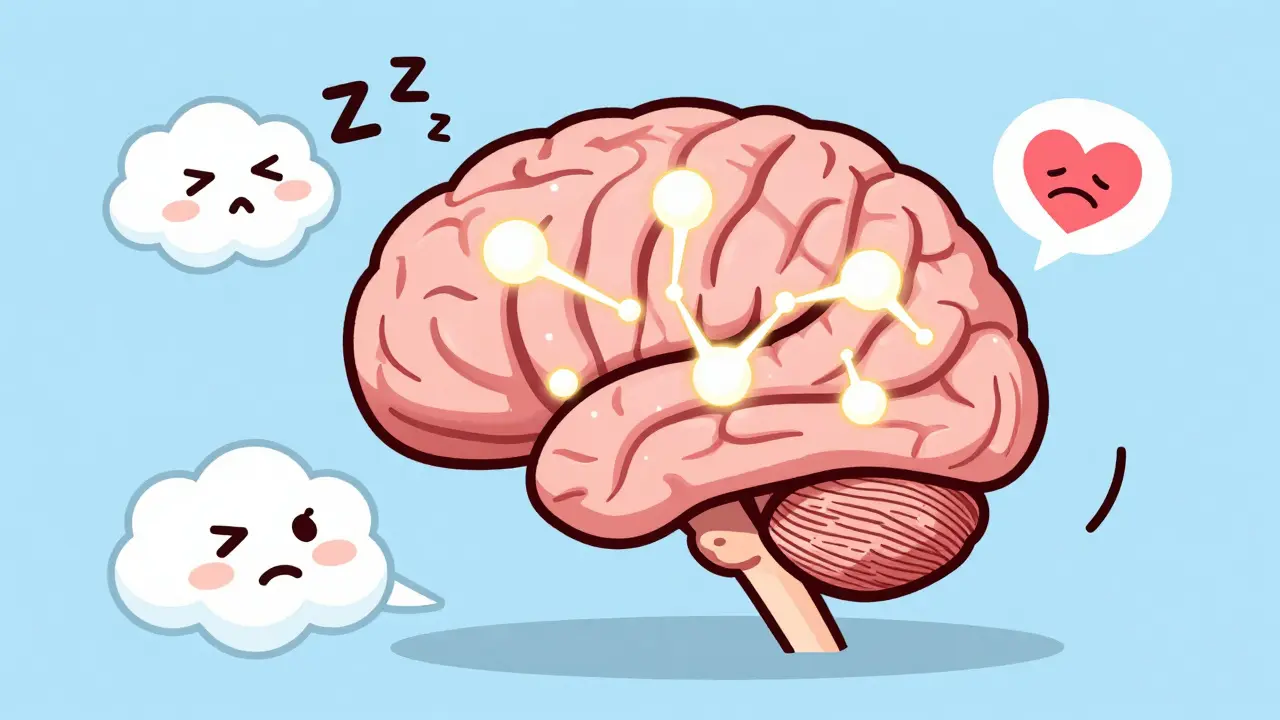
SSRI Side Effect Comparison Tool
Understand Your SSRI Side Effects
SSRIs can cause a range of side effects from mild to severe. This tool helps you compare common side effects across different medications to make informed decisions with your doctor.
Choose Your SSRI
Select your medication to see common side effects and what to expect.
Key Information
Most fade within 3 weeks. Nausea affects about half of new users.
Affects 56-70% of users. Often persists for 6+ months even after depression improves.
Average 0.5-2 kg in first 3 months. Paroxetine and sertraline are worst offenders.
Side Effect Profile
Select an SSRI from the dropdown above to see detailed side effect information.
What You Can Do
Track Your Side Effects
Keep a log of dates, side effects, and severity (1-10). This helps identify patterns.
Adjust Timing
Take with food for nausea, or switch to morning for insomnia.
Ask Your Doctor
Discuss options like bupropion for sexual dysfunction or dietary changes for weight management.
When you start taking an SSRI - whether it’s sertraline, fluoxetine, or escitalopram - you’re not just fighting depression or anxiety. You’re also introducing a chemical that changes how your brain handles serotonin. And while that can lift your mood, it also sets off a chain reaction in your body. Side effects aren’t rare. They’re normal. And they range from barely noticeable to seriously disruptive. If you’ve been told, "It’s just temporary," but the nausea, sleepless nights, or loss of libido won’t go away, you’re not alone. This is what actually happens - from day one to long-term use.
What SSRIs Do (And Why Side Effects Happen)
SSRIs - Selective Serotonin Reuptake Inhibitors - work by blocking the brain’s recycling system for serotonin. Normally, after serotonin sends a signal between nerve cells, it’s pulled back in. SSRIs stop that. More serotonin stays around, which helps improve mood over time. But serotonin isn’t just in the brain. It’s in your gut, your heart, your skin, and your sex organs. When you flood the system, side effects show up where serotonin does its other jobs.
That’s why nausea hits before your mood lifts. Why you feel dizzy. Why sex becomes harder. It’s not a flaw in the drug. It’s how it works. And it’s why some people feel worse before they feel better.
Most Common Mild Side Effects (And When They Fade)
Most people on SSRIs get at least one side effect in the first few weeks. In fact, 86% of patients report them. But here’s the thing: many fade. Fast.
- Nausea and stomach upset - Affects about half of new users. It peaks in the first week. Taking the pill with food cuts it by 60%. Most people say it’s gone in 3 weeks.
- Drowsiness or fatigue - Happens in over half of users. If it’s making you crash at work, try taking it at night. For others, it’s the opposite - they feel wired. Then morning dosing helps.
- Headache - Common in the first 10 days. Usually mild. Drink water. Skip caffeine. It often disappears on its own.
- Dry mouth - Annoying, but not dangerous. Suck on sugar-free gum. Keep water nearby.
- Insomnia or sleepiness - Some SSRIs (like fluoxetine) are energizing. Others (like paroxetine) make you sleepy. Timing matters. Switching from night to morning can fix this.
GoodRx data shows 78% of nausea cases disappear within 3 weeks. Your body adjusts. It’s not failing. It’s adapting.
The Big One: Sexual Dysfunction
This is the side effect no one talks about - until it’s happening to you. And then, it’s everything.
Studies show 56% of people on SSRIs have sexual side effects. Real-world reports? Up to 70%. That’s not a small number. That’s the majority.
- Men: delayed or absent ejaculation, erectile dysfunction
- Women: low libido, trouble reaching orgasm
- Both: reduced pleasure, emotional numbness during sex
Reddit’s r/antidepressants community found 68% of users listed this as their worst side effect. And 42% said it lasted over 6 months - even after the depression got better.
It’s not just "in your head." SSRIs activate serotonin receptors in the spinal cord that block sexual response. The science is clear. And it’s not reversible overnight.
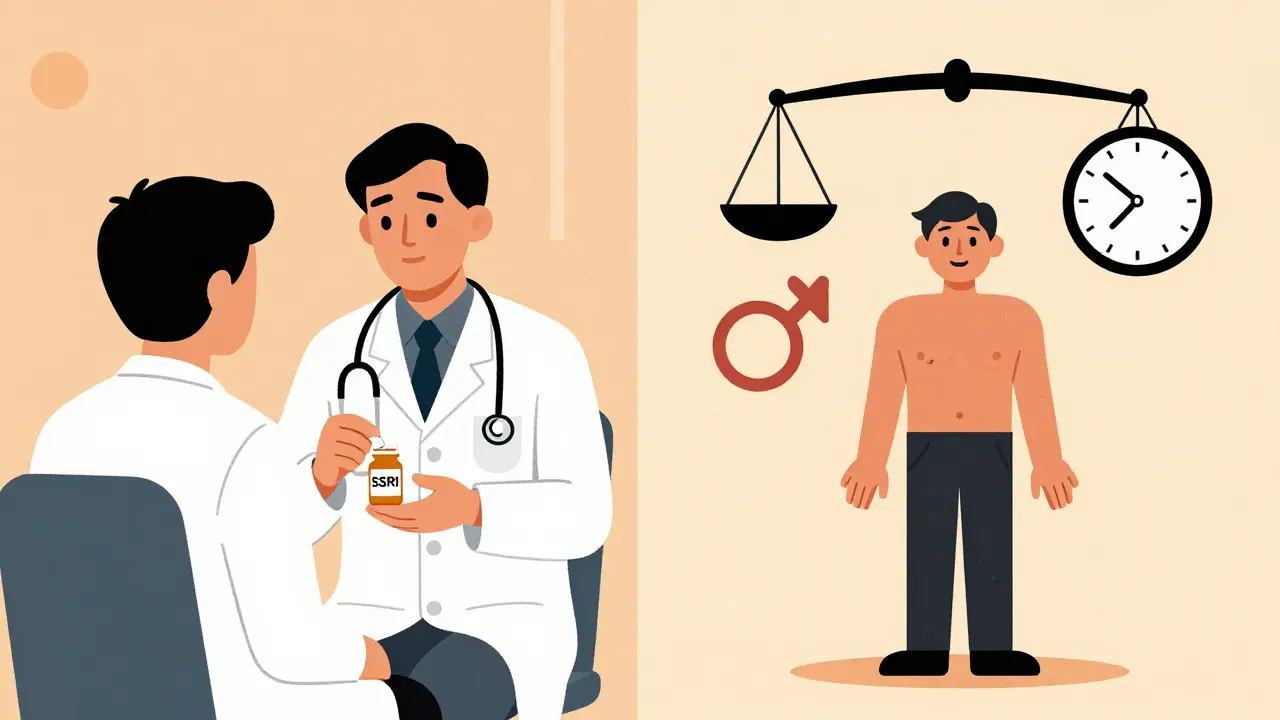
What helps? Some people lower their dose. Others take a "medication holiday" (a day off, under doctor supervision). Some use sildenafil (Viagra) - studies show it helps 67% of men. Bupropion (Wellbutrin) is often added to counteract it. But none of this works for everyone. And there’s no quick fix.
Weight Gain: It’s Not Just Eating More
You didn’t binge. You didn’t stop exercising. But the scale moved. Why?
SSRIs affect appetite, metabolism, and insulin sensitivity. A 2023 meta-analysis found people on SSRIs gained 0.5 to 2 kg in the first 3 months - and kept gaining. By 6 months, 49% reported noticeable weight gain.
Paroxetine and sertraline are the worst offenders. Fluoxetine? Less so. Citalopram? Often neutral.
But here’s the key: it’s not just calories. SSRIs can slow your metabolism. They may increase insulin resistance. A 2023 FDA safety alert flagged a 24% higher risk of developing type 2 diabetes with long-term SSRI use - especially if you’re already at risk.
What can you do? Move. Eat protein-rich meals. Don’t skip breakfast. A 2023 study showed people who added 30 minutes of walking daily and cut sugary snacks gained 3.2 kg less than those who didn’t. It’s not about willpower. It’s about counteracting a biological shift.
Discontinuation Syndrome: Why You Can’t Just Stop
You feel better. You want to quit. Then - dizziness. Brain zaps. Nausea. Anxiety. Insomnia. It feels like your body is falling apart.
This is SSRI discontinuation syndrome. And it’s real. It hits hardest with drugs that leave your system fast - paroxetine and fluvoxamine. Even if you’ve been on it for 3 months, stopping cold turkey can trigger symptoms within 24 hours.
Here’s what you need to know:
- Symptoms start within 1 week of stopping
- They peak at day 3-5
- Most resolve in 2-3 weeks
The fix? Taper slowly. Reduce by 10-25% every 2-4 weeks. Don’t skip doses. If you feel weird, go back to your last dose and slow down more. Many doctors don’t warn you about this. Don’t assume they will.
Severe Side Effects (Rare - But Critical)
Most side effects are annoying. A few are dangerous. Know the signs.
Serotonin Syndrome
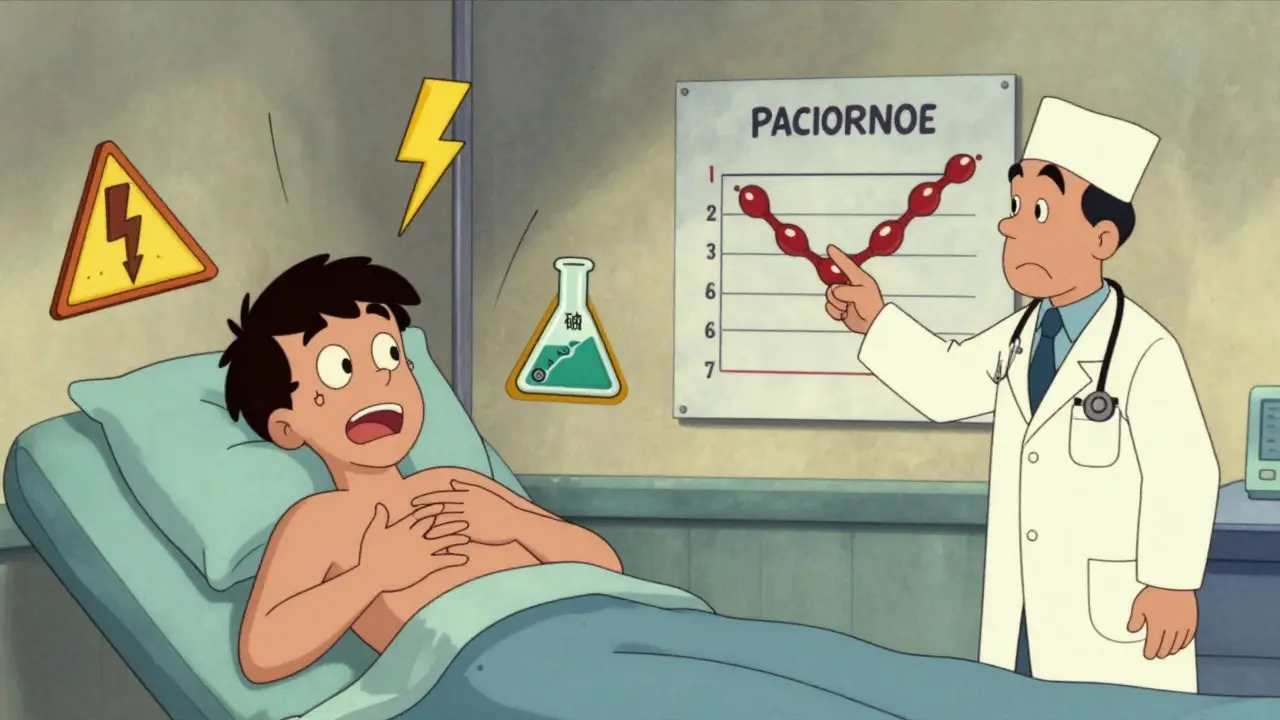
This is rare - less than 1 in 1,000 - but deadly if missed. It happens when serotonin builds up too fast. Usually from mixing SSRIs with other drugs: tramadol, MDMA, certain migraine meds, St. John’s Wort, or even some cold medicines.
Symptoms:
- Fast heartbeat
- Sweating, shivering
- Tremors
- Confusion
- High fever
- Uncontrolled muscle movements
If you have 3 or more of these - go to the ER. Now. No waiting. This isn’t a "wait and see" situation.
Hyponatremia (Low Sodium)
Most common in older adults. Especially if you’re on diuretics, have heart or kidney issues, or drink too much water.
Symptoms: headache, nausea, confusion, seizures. Blood tests catch it early. If you’re over 65, ask your doctor to check sodium levels at 2 and 6 weeks after starting.
Extrapyramidal Symptoms (EPS)
Think Parkinson’s-like reactions. Not common, but more than you think.
- Akathisia - constant restlessness. You can’t sit still. It feels like panic.
- Dystonia - muscles spasm. Neck twists. Eyes roll back.
- Parkinsonism - stiff limbs, slow movement.
These often appear in the first few weeks. They’re not "anxiety." They’re neurological. Tell your doctor. A beta-blocker or anticholinergic can help.
How Different SSRIs Compare
Not all SSRIs are the same. One might work for your mood. Another might wreck your sleep. Here’s how they stack up:
| Medication | Best For | Worst Side Effects | Tolerability Rating |
|---|---|---|---|
| Citalopram (Celexa) | General anxiety, depression | QT prolongation (heart rhythm risk at high doses) | Best |
| Escitalopram (Lexapro) | Depression, OCD | Dizziness, headache, memory issues | Very Good |
| Sertraline (Zoloft) | Depression, PTSD, social anxiety | Weight gain, diarrhea, low appetite | Good |
| Fluoxetine (Prozac) | Long-term use, OCD | Insomnia, weight gain, delayed onset | Good |
| Paroxetine (Paxil) | Generalized anxiety, panic | Sexual dysfunction, weight gain, severe discontinuation | Poor |
| Fluvoxamine (Luvox) | OCD | GI upset, dizziness, high discontinuation rate | Worst |
Fluoxetine lasts longer in your body. That means fewer withdrawal symptoms - but slower to adjust. Paroxetine leaves fast. That means more withdrawal - but quicker to change if it’s not working.
What Doctors Aren’t Telling You
Drug trials report side effects at 20-30% rates. Real-world data? 86%. Why? Trials exclude people with other conditions. They use short timeframes. They don’t ask about sex, sleep, or energy.
Dr. David Healy, a leading psychopharmacologist, says side effects are underreported by 2-3 times in clinical studies. That’s not a flaw in patients. It’s a flaw in how we study drugs.
And here’s the quiet truth: many doctors still say, "Just wait two weeks." But if you’re having sexual dysfunction, weight gain, or insomnia - and it’s wrecking your life - waiting isn’t helpful. It’s harmful.
Today, 78% of psychiatrists in the U.S. now discuss side effects in detail before prescribing. 63% use genetic testing to predict who’s more likely to gain weight or have sexual side effects. You deserve that level of care.
What to Do If Side Effects Hit
Don’t quit. Don’t suffer. Do this:
- Track it. Keep a simple log: date, side effect, severity (1-10), time of day. Use your phone notes. You’ll spot patterns.
- Time it. Nausea? Take with food. Insomnia? Switch to morning. Dizziness? Don’t drive until it clears.
- Ask for help. Sexual dysfunction? Ask about bupropion or sildenafil. Weight gain? Ask for a nutrition referral. Sleep issues? Ask about melatonin or cognitive behavioral therapy for insomnia (CBT-I).
- Don’t stop cold. If you want out, talk to your doctor. Tapering takes weeks. It’s not weakness. It’s smart.
- Know your options. If SSRIs aren’t working? There are other antidepressants - SNRIs, bupropion, mirtazapine - with different side effect profiles.
Side effects don’t mean you’re broken. They mean the drug is working - and your body is reacting. The goal isn’t to avoid side effects entirely. It’s to manage them so your life doesn’t get worse than your depression.
Final Thought: It’s Not All-or-Nothing
You don’t have to choose between "feeling normal" and "being on medication." The best treatment isn’t the one with zero side effects. It’s the one where the benefits outweigh the costs - and you’re in control.
That means knowing your triggers. Asking for help. Adjusting. Switching. Tapering. It means your doctor listens - not just prescribes.
SSRIs saved millions. But they’re not magic. They’re tools. And like any tool, they need to be used with care, awareness, and a plan.
Do SSRI side effects go away over time?
Many do - especially nausea, headaches, and dizziness. About 78% of people find these fade within 3-6 weeks as their body adjusts. But sexual dysfunction and weight gain often persist. If they’re still bothering you after 8 weeks, talk to your doctor. You shouldn’t have to live with side effects that ruin your quality of life.
Which SSRI has the least side effects?
Citalopram (Celexa) and escitalopram (Lexapro) are generally the best tolerated. They have lower rates of sexual side effects and weight gain compared to paroxetine or fluvoxamine. Fluoxetine (Prozac) is also well-tolerated long-term but can cause insomnia. Always start low and go slow - even with the "best" SSRI.
Can SSRIs cause permanent damage?
There’s no solid evidence SSRIs cause permanent brain or organ damage. But some side effects - like sexual dysfunction or weight gain - can last months or years after stopping. This is called Post-SSRI Sexual Dysfunction (PSSD), and while rare, it’s documented in medical literature. If you experience persistent symptoms after stopping, seek a specialist. You’re not imagining it.
Why do SSRIs make me feel worse at first?
SSRIs boost serotonin quickly - but your brain needs time to adapt. In the first 1-2 weeks, serotonin surges can overstimulate receptors that control anxiety, nausea, and sleep. This is why many feel more anxious or nauseous before they feel better. It’s not the medication failing - it’s your brain recalibrating. Most people improve after 3-4 weeks.
Is it safe to take SSRIs long-term?
Yes - for many people, SSRIs are safe for years. But long-term use increases risks like weight gain, insulin resistance, and bone density loss. The FDA now requires stronger warnings about metabolic changes. If you’re on an SSRI for more than a year, get regular blood sugar, weight, and bone density checks. Don’t assume it’s fine just because you feel okay.
Can I switch SSRIs if side effects are bad?
Yes - and it’s often the best move. Switching isn’t failure. It’s strategy. Many people switch from paroxetine to escitalopram or fluoxetine to find a better fit. But never switch cold turkey. You need a cross-taper: slowly reduce the old one while adding the new one over 2-4 weeks. Do this with your doctor’s guidance.
Side effects aren’t a sign you’re weak. They’re a sign you’re human. And the right treatment doesn’t just fix your mood - it lets you live again.

Joshua Smith
February 9, 2026 AT 15:42I've been on sertraline for 14 months. Nausea faded after 3 weeks, but the libido thing? Still there. Didn't expect that. Tried the bupropion combo and it helped a bit, but not enough. Went back to baseline and just accepted it. Worth it for the anxiety relief, honestly.
My doc didn't mention the sexual side effects until I brought it up. Kinda felt like I was the problem for complaining. Glad this post exists.
Patrick Jarillon
February 10, 2026 AT 22:37SSRIs are a corporate psyop. Big Pharma doesn't care if you're numb or horny or gaining 20 lbs. They care about the quarterly财报. They knew about serotonin syndrome for decades. They buried it. The FDA? Bought and paid for. They don't want you to know about PSSD because if you did, you'd never take another pill.
My cousin stopped fluoxetine cold turkey and ended up in a psych ward. They said it was 'withdrawal psychosis.' Bullshit. It was the brain screaming. They don't warn you because they want you addicted to the side effects.
Google 'SSRI brain damage' and tell me what you find. I dare you.
Kathryn Lenn
February 12, 2026 AT 09:35Oh sweet Jesus, another 'here's how to manage your chemical enslavement' guide. Let me guess - next you'll tell me to 'track my mood in a journal' like that's gonna fix the fact that I can't feel joy or touch my partner without wanting to cry.
And don't get me started on 'taper slowly.' That's just a fancy way of saying 'suffer longer so we can keep billing you.'
They call it 'treatment.' I call it slow-motion emotional amputation. And you're all just here to nod and say 'yeah, I know right?' Like it's a fucking support group for people who lost their souls to a prescription.
Camille Hall
February 13, 2026 AT 09:23Thank you for writing this. So many people feel alone with this stuff. I was on paroxetine for 18 months. Weight gain, zero libido, insomnia - all of it. I felt broken.
Switching to escitalopram was the best decision I ever made. Side effects? Barely there. Took me 6 months to find it, though. Don't give up.
If you're struggling with sexual side effects - talk to a therapist who specializes in sexual health. They can help you navigate it without shame. You're not broken. Your brain just needs a different signal.
Frank Baumann
February 14, 2026 AT 03:21Let me tell you what nobody says: SSRIs don't just affect your brain. They mess with your gut microbiome. Serotonin is 95% made in your intestines. When you flood the system with synthetic reuptake inhibitors, you're basically telling your gut bacteria to shut up and sit down. That's why nausea, bloating, constipation - it's all connected.
I started taking probiotics, fiber, and fermented foods. Within 3 weeks, my stomach stopped rebelling. My sleep improved. My energy came back. I didn't even realize how much my gut was contributing until I fixed it.
And yes, I still have some sexual side effects. But they're manageable now. My point? Don't just blame the drug. Look at the whole system. Your body isn't just a brain with legs.
Also, if you're over 40, get your vitamin D and magnesium levels checked. Deficiency makes everything worse. I was deficient. My doc didn't check. I had to Google it myself. Welcome to modern medicine.
Lyle Whyatt
February 15, 2026 AT 22:34Man, I wish I'd read this 2 years ago. I was on fluoxetine for 8 months. Thought the insomnia was just 'anxiety.' Turns out it was the damn drug. Took me 3 tries to find the right one. Started with sertraline - nausea. Switched to citalopram - dizziness. Ended up on escitalopram. Zero issues after 6 weeks.
One thing no one talks about: the emotional blunting. It's not just sex. It's crying at movies. It's not feeling excited about birthdays. It's not feeling angry when you should be. I thought I was just 'calmer.' Turns out I was numb.
My therapist said it's like turning down the volume on your emotions. Sometimes that's good. Sometimes it's like living in a soundproof room. You have to decide what matters more.
And yeah - tapering is non-negotiable. I tried quitting cold after 3 months. Felt like my brain was being pulled out through my ears. Took 3 weeks to stabilize. Don't be me.
Tatiana Barbosa
February 16, 2026 AT 03:38SSRIs are not the enemy. The system is.
Doctors don't have time. Insurance won't pay for therapy. So we get a script and a pamphlet.
I was on sertraline for 10 months. Weight gain? Check. Libido? Gone. Sleep? Janky.
But here's the thing - I got better. My panic attacks stopped. I could hold a job. I could talk to my mom again.
Side effects suck. But they're not the whole story. Don't let them erase your progress.
And if you're scared to talk to your doc? Bring this article. Print it. Highlight it. They need to hear this too.
You're not weak. You're adapting. Keep going.
Susan Kwan
February 18, 2026 AT 02:12Of course the article says 'it's not your fault' - it's written by a pharma rep with a PR degree.
They don't tell you about the brain zaps because they don't want you scared off. They don't mention PSSD because they know people will stop taking it.
And let's be real - who's going to admit their life is worse after 2 years of 'treatment'?
I used to be funny. Now I'm a zombie with a 401(k).
But hey - at least I'm not depressed. Right?
Right?
Brett Pouser
February 18, 2026 AT 14:21Just moved from the US to Australia. Got prescribed sertraline here. Doc sat me down for 45 mins. Asked about sleep, sex, appetite, energy. Showed me charts. Gave me a pamphlet with real data. No BS.
Back home? I got a script and a 'take it daily' emoji.
Turns out, the system works better when doctors aren't seeing 20 patients an hour.
Don't get me wrong - SSRIs still mess with your sex life. But at least I knew what I was signing up for.
Maybe we need more of this. Not less.
Simon Critchley
February 18, 2026 AT 15:48SSRI = Serotonin System Ruin Initiative. LOL.
Look at the table - paroxetine = worst. Fluoxetine = 'good' but gives you insomnia and delayed onset. Citalopram = 'best'... until your ECG shows QT prolongation.
It's a game of whack-a-mole. You fix one side effect, another pops up.
And don't even get me started on 'medication holidays'. That's just a fancy way of saying 'we're gonna yank your brain's serotonin supply and watch you spiral'.
Pharma’s playbook: create dependency → monetize side effects → upsell with adjunct meds → repeat.
It’s not medicine. It’s a subscription service.
Karianne Jackson
February 18, 2026 AT 23:15I cried for 3 weeks straight. Then I stopped. Now I’m fine. No meds. No therapy. Just… me.
They told me I needed it. I believed them.
Turns out, I just needed to stop pretending I was okay.
Side effects? Yeah. But so was my life before.
Just sayin’.