
When you pick up a generic pill from the pharmacy, you expect it to work just like the brand-name version. But have you ever wondered how that pill stays safe and effective for months-or even years-after it leaves the factory? The answer lies in something most people never think about: stability.
Stability isn’t just about whether a drug looks the same. It’s about whether it still contains the right amount of active ingredient, doesn’t break down into harmful substances, and stays free from contamination. For generic drugs, this is even more critical. Unlike brand-name drugs, generics often use different fillers, coatings, or manufacturing methods. These small differences can make a big impact on how long the medicine lasts-and whether it’s still safe to take after the expiration date.
What Does "Shelf Life" Really Mean?
The shelf life of a medication is the period during which it is guaranteed to remain safe, effective, and within strict quality standards. This isn’t a guess. It’s based on real, scientifically tested data. The U.S. Food and Drug Administration (FDA) requires every drug, generic or not, to go through formal stability studies before it can be sold.
According to FDA regulations, expiration dates must reflect when the drug is no longer guaranteed to meet its labeled potency. That doesn’t mean it suddenly turns toxic on the day after expiration. But it does mean that the amount of active ingredient may have dropped below the minimum needed to work properly. In some cases, degradation products may have built up to unsafe levels.
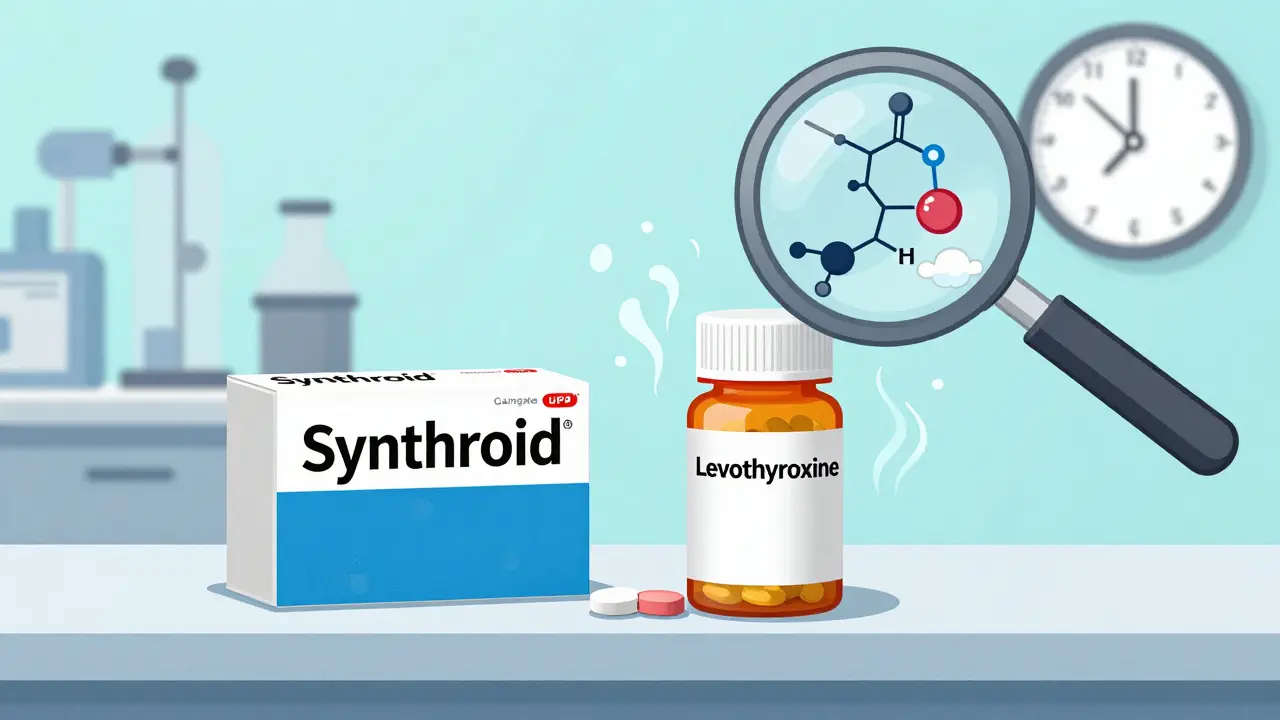
For example, a 2020 FDA study found that 17.3% of generic levothyroxine products (used for thyroid conditions) had stability issues not seen in the brand-name version, Synthroid. Why? Moisture. The generic versions didn’t protect the active ingredient as well from humidity, causing it to break down faster. That’s why expiration dates exist-not to scare you, but to protect you.
The Four Pillars of Drug Stability
Stability testing isn’t one test. It’s four separate checks, each focused on a different way a drug can fail:
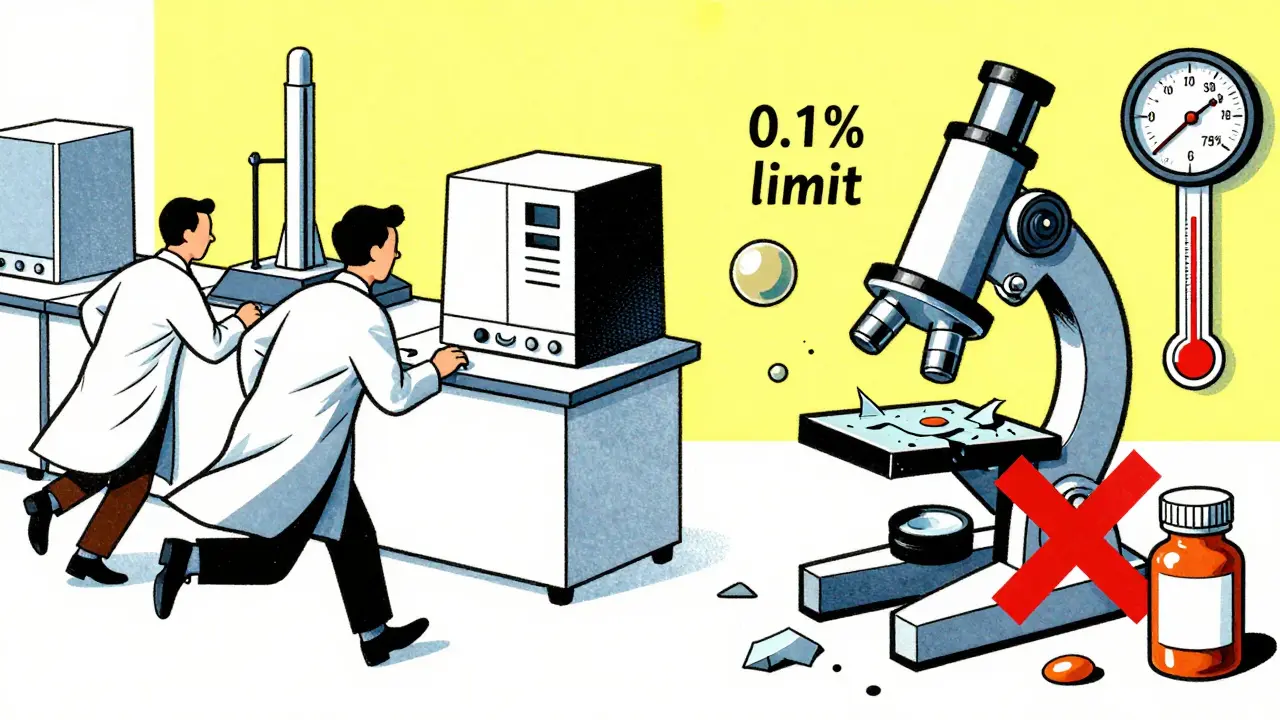
- Chemical stability: Does the active ingredient stay chemically intact? This is measured using HPLC (High Performance Liquid Chromatography), which can detect even tiny amounts of breakdown products. The ICH Q3B guideline says unknown impurities must stay below 0.1%. Any more, and the drug is considered unsafe.
- Physical stability: Does the pill still dissolve properly? Does the liquid still flow through the dropper? For nanoparticles used in treatments like cystic fibrosis therapies, particle size must stay under 200nm. If they clump together, they won’t reach the lungs. Dissolution tests, viscosity checks, and appearance reviews are all part of this.
- Microbiological stability: Is the product still free from bacteria or mold? Non-sterile products (like oral liquids or creams) must have fewer than 100 colony-forming units per gram (CFU/g). Sterile injectables must meet an even stricter standard: a 1 in 1 million chance of contamination (SAL of 10^-6). A 2022 survey found that 41.3% of drug recalls were caused by microbial growth due to changes in water activity or preservative failure.
- Functional stability: Does the delivery system still work? For inhalers, each puff must deliver 90-110% of the labeled dose. For eye drops, the bottle must still dispense the right number of drops. If the mechanism fails, the medicine can’t do its job.
Each of these tests must be validated using approved methods. Skipping validation is one of the top reasons companies get cited by the FDA. In fact, 58.4% of drug manufacturers don’t fully validate their testing methods-putting patients at risk.
How Long Do They Test? The Science Behind the Dates
Stability testing doesn’t happen overnight. The standard protocol follows ICH Q1A(R2) guidelines, which require testing at 0, 3, 6, 9, 12, 18, 24, and 36 months. That’s three years of real-time data before a 36-month expiration date is approved.
But no one waits three years to launch a drug. So companies use accelerated testing: storing the product at 40°C (104°F) and 75% humidity for six months. The idea is that heat and moisture speed up degradation, so if the drug holds up under those conditions, it’ll last longer at room temperature.
Here’s the catch: this method isn’t perfect. A user on the American Pharmaceutical Review forum shared a costly mistake: their accelerated test showed no degradation, but after 24 months in real-world storage, the drug crystallized. Why? A hidden polymorphic transition-something heat alone couldn’t trigger. The lesson? Accelerated testing can miss real-world risks.
Temperature matters more than you think. The FDA defines "room temperature" as 15-30°C (59-86°F), but research shows 24-25°C is the sweet spot for most stability studies. In places like Melbourne, where average temperatures hover around 22°C, this is ideal. But in hotter regions, warehouses can hit 35°C or higher. A 2022 MIT study predicts that by 2050, rising global temperatures could shorten average drug shelf life by nearly five months.
Why Generics Are More Vulnerable
Generic drugs are cheaper because they don’t repeat expensive clinical trials. But they still need to prove they’re bioequivalent-meaning they deliver the same amount of active ingredient into the bloodstream as the brand-name drug.
What they don’t always replicate is the exact formulation. Excipients (inactive ingredients like fillers, binders, or preservatives) can vary. A small change in moisture absorption can cause a tablet to degrade faster. A different coating might let in more oxygen, speeding up oxidation.
That’s why the FDA found differences in levothyroxine stability. It’s also why 62.7% of stability professionals surveyed by the Parenteral Drug Association had seen a recall due to stability issues in the past five years. The problem isn’t that generics are unsafe-it’s that their stability profiles are less predictable.
Some companies are pushing back. The IQ Consortium developed Risk-Based Predictive Stability (RBPS) tools that cut testing time by 30% in pilot studies with Amgen and Merck. These tools use data modeling to predict degradation paths instead of waiting for real-time results. But regulators are slow to adopt them. As of 2023, only a handful of companies have been approved to use these methods.
What Happens When Stability Fails?
When a drug degrades, it doesn’t just lose strength. It can become dangerous.
- Deactivated antibiotics may fail to treat infections, leading to antibiotic resistance.
- Broken-down insulin can cause dangerous blood sugar spikes.
- Degraded nitroglycerin (used for heart attacks) may not work when needed most.
- Chemical breakdown products like formaldehyde or benzene can accumulate, raising cancer risk over time.
And it’s not just drugs. The same rules apply to food, vaccines, and even medical devices. A food company in Australia reported a 22% longer shelf life for refrigerated soups by using better moisture and pH monitoring-showing how science can extend safety.
But here’s the reality: most people don’t know how to store medicines properly. The FDA says 80% of Form 483 citations (official warnings) to drug companies are due to poor storage documentation. "Room temperature" isn’t enough. You need to know if it’s 22°C or 32°C. Humidity levels? Not recorded. Temperature logs? Missing. These aren’t just paperwork issues-they’re safety gaps.
What You Can Do
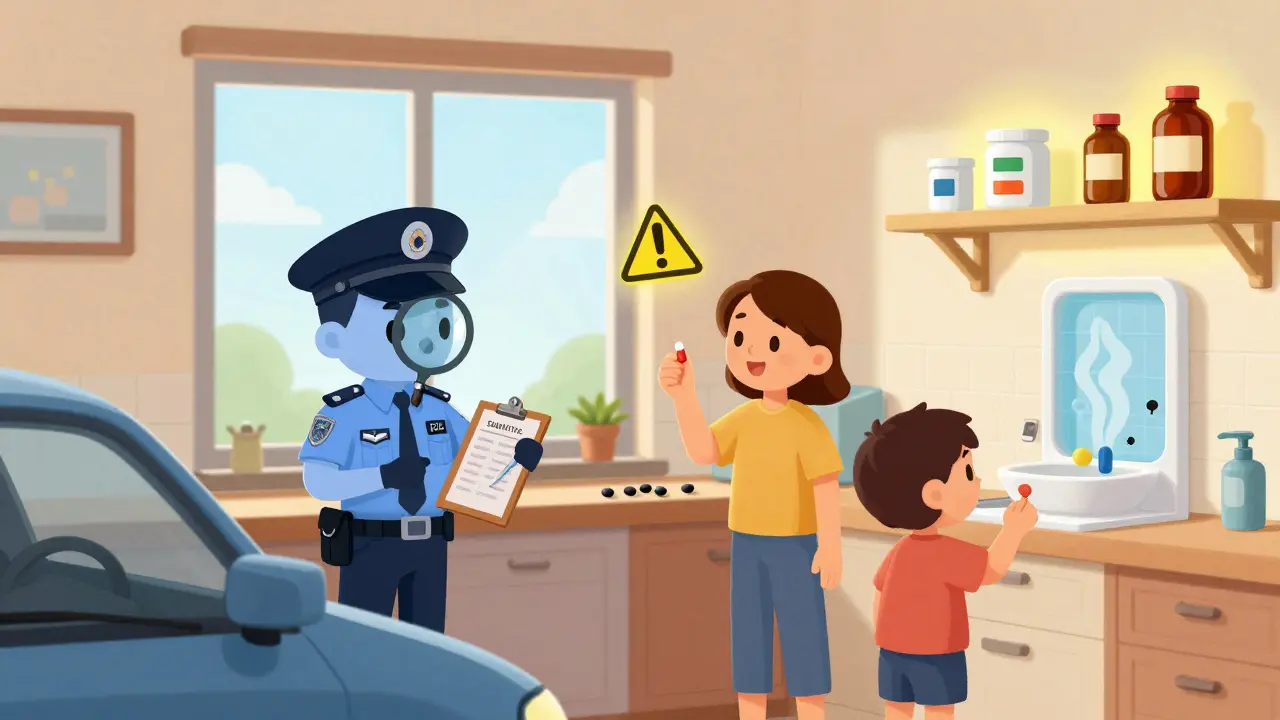
- Store medicines in a cool, dry place-not the bathroom or the dashboard of your car.
- Check expiration dates before use. Don’t assume "it’s probably still okay."
- Keep pills in their original packaging. Blister packs and amber bottles protect against light and moisture.
- Don’t share or use expired drugs, especially for chronic conditions like thyroid disease, epilepsy, or heart failure.
- If you’re unsure, ask your pharmacist. They’re trained to spot stability red flags.
For manufacturers, the future lies in smarter testing. The FDA’s 2023 pilot for Continuous Manufacturing Stability Testing cut time-to-market by 40%. And the new ICH Q12 guideline, effective in late 2023, allows companies to make post-approval changes with less retesting-if they can prove stability won’t be affected.
But for now, the safest rule is simple: if it’s expired, don’t take it. Stability science keeps us safe. But only if we respect the data behind the date on the bottle.
Can I still use a generic drug after its expiration date?
It’s not recommended. While some drugs may remain physically intact past their expiration date, there’s no guarantee they’ll still work as intended. Potency can drop below effective levels, and harmful degradation products may form. For life-saving medications like insulin, epinephrine, or antibiotics, using expired versions can be dangerous. Always follow the labeled expiration date.
Why do generic drugs sometimes have shorter shelf lives than brand-name ones?
Generics aren’t required to copy the exact inactive ingredients (excipients) used in brand-name drugs. Differences in coatings, fillers, or moisture barriers can affect how well the active ingredient is protected. For example, a generic thyroid medication might use a cheaper packaging material that lets in more humidity, causing the drug to break down faster. This doesn’t mean the generic is ineffective-it just means its stability profile was tested under different conditions and may not last as long.
How do regulators test for drug degradation?
Regulators use a combination of chemical, physical, microbiological, and functional tests. High Performance Liquid Chromatography (HPLC) detects chemical breakdown products. Dissolution testing checks if tablets release their active ingredient properly. Microbial testing counts bacteria and mold. For inhalers and injectables, dose uniformity and sterility are measured. All methods must be validated under ICH Q2(R1) guidelines to ensure accuracy and reliability.
Is accelerated stability testing reliable?
Accelerated testing (40°C/75% RH for 6 months) is useful for predicting shelf life, but it has limits. It works well for simple degradation pathways, like oxidation or hydrolysis. But it can miss complex changes-like crystal structure shifts, polymorphic transitions, or physical instability in suspensions. That’s why real-time, long-term studies are still required for final approval. Accelerated data alone can’t guarantee safety over years.
What’s the biggest cause of drug recalls related to stability?
The top cause is microbial growth in preservative systems, especially in liquid medications and eye drops. Changes in water activity, pH, or preservative concentration can allow bacteria or fungi to grow. A 2022 survey found that 41.3% of stability-related recalls were due to this issue. Poor storage conditions, like leaving medicine in hot cars or humid bathrooms, can accelerate this problem.
