
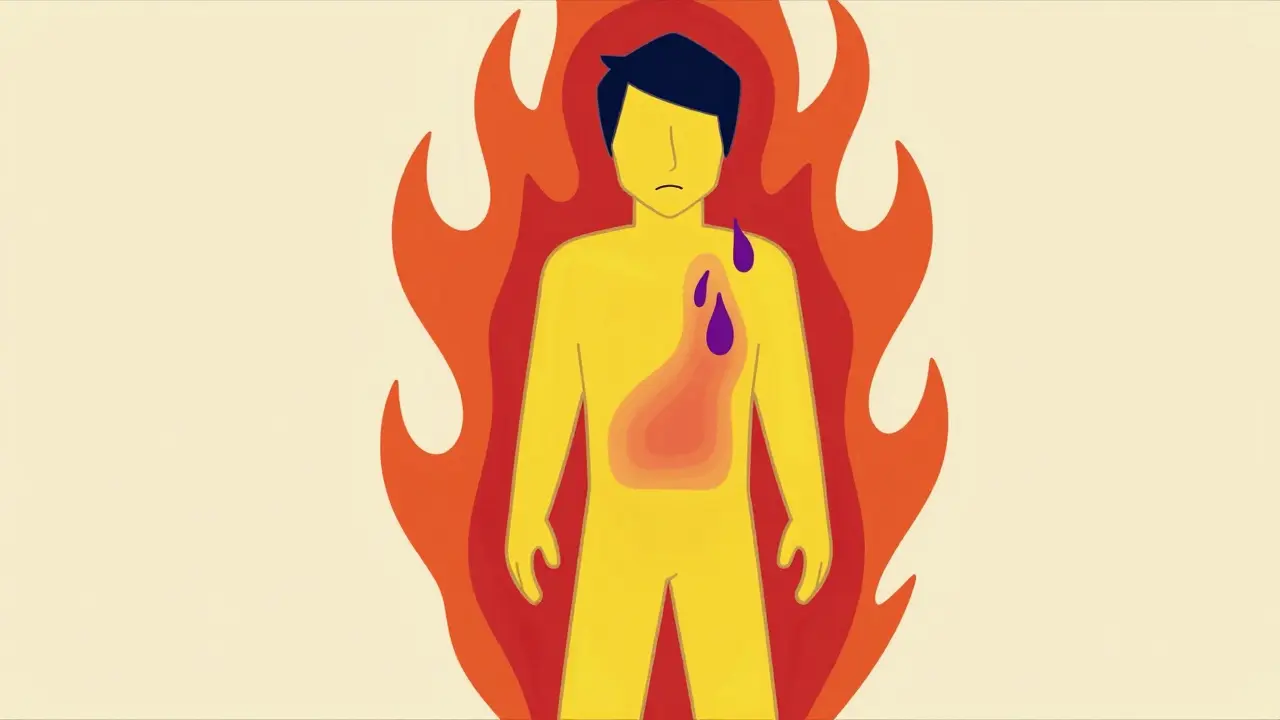
Understanding Severe Skin Reactions
Imagine waking up with a flu-like feeling that quickly turns into a nightmare where your skin starts to peel off. That is the reality for people suffering from Stevens-Johnson Syndrome. Alongside its more severe cousin, Toxic Epidermal Necrolysis (also known as Lyell's syndrome), these conditions represent a rare but life-threatening immune system overreaction. They are not typical rashes; they are medical emergencies where the body essentially rejects its own outer layer.
| Condition | Skin Detachment Area | Mortality Rate | Clinical Focus |
|---|---|---|---|
| SJS | <10% BSA | 5-15% | Supportive Care |
| SJS/TEN Overlap | 10-30% BSA | ~20% | Aggressive Intervention |
| TEN | >30% BSA | ~25% | Critical Care/Burn Unit |
Key Takeaways
- SJS and TEN are severe, potentially fatal cutaneous adverse reactions primarily triggered by medications.
- Early recognition of flu-like symptoms followed by a rash is critical for survival.
- Specific drugs like allopurinol and antiepileptics pose the highest risk, especially in genetically susceptible individuals.
- Hospital admission, usually to a burn unit, is required immediately upon suspicion.
- Long-term complications can affect eyes, skin, and psychological well-being even after healing.
The Disease Spectrum
Medical professionals treat Stevens-Johnson Syndrome and Toxic Epidermal Necrolysis as two ends of the same coin. Historically, doctors viewed them as separate issues, but modern consensus clarifies they are a continuum. The difference lies purely in how much of your skin detaches. If less than 10% of your body surface area (BSA) peels away, it falls under SJS. If it exceeds 30%, it is classified as TEN. The middle ground, affecting 10% to 30%, is often called the overlap syndrome.
This distinction matters because it dictates the intensity of treatment and the prediction of survival. These conditions were first identified by Albert Mason Stevens and Frank Chambliss Johnson in 1922. Decades later, Dr. Alan Lyell described the severe form that we now call Lyell's syndrome. Today, organizations like the World Health Organization classify them strictly by the percentage of detached skin to ensure consistent reporting and care standards globally.
Recognizing the Warning Signs
You cannot ignore the onset of these reactions because the progression happens rapidly. It usually starts with a prodromal phase lasting one to three days. During this time, the patient feels like they have the flu. You will see high fevers (often above 102°F), headaches, and sore throats. Some people mistake this for a common cold and take over-the-counter pain relievers, unknowingly worsening the reaction.
Within 24 to 72 hours, the skin changes begin. It starts on the trunk before spreading to the face and limbs. The spots look flat and red or purple. Unlike chickenpox, they do not appear on palms, soles, or the scalp initially. These macules quickly blister. As the blisters merge, large sheets of skin slip off-a clinical sign known as a positive Nikolsky sign. Doctors test this by gently rubbing the skin; if the top layer slides off, it confirms the diagnosis.
Mucous membranes are almost always involved. This means the mouth, eyes, genitals, and respiratory tract get raw and inflamed. Nearly half of patients suffer in three or more areas simultaneously. The eye involvement is particularly concerning, with 80% of patients experiencing ocular surface damage.
Primary Culprits and Triggers
While infections like Mycoplasma pneumoniae can trigger cases in children, the vast majority of adult cases come from prescription medicines. Approximately 80% of cases identify a specific drug as the cause. It is crucial to know the high-risk offenders:
- Antiepileptics: Drugs like carbamazepine, phenytoin, and lamotrigine account for about 30% of cases.
- Antibiotics: Sulfonamides, specifically trimethoprim-sulfamethoxazole (Bactrim), are responsible for roughly 20% of incidents.
- Gout Meds: Allopurinol stands out as a major culprit, triggering about 15% of reactions.
- Pain Relievers: NSAIDs like ibuprofen or naproxen can rarely trigger this, though it is less common than with other classes.
There is a genetic component you cannot ignore. Specific genes dramatically alter risk. If you carry the HLA-B*15:02 allele, your risk of developing a reaction to carbamazepine increases by 1,000-fold compared to those without it. Similarly, the HLA-B*58:01 allele makes allopurinol dangerous for carriers, raising risk by 80 to 580 times. Because of this, health agencies now recommend screening Asian populations for these markers before prescribing certain anti-seizure or gout medications.
Diagnosis and Medical Testing
Doctors rely on the RegiSCAR criteria to confirm the diagnosis definitively. They need to see acute onset, skin tenderness, and typical target lesions alongside mucosal involvement. However, clinical judgment alone isn't enough. A skin biopsy remains the gold standard. Under a microscope, pathologists look for full-thickness keratinocyte necrosis with very few inflammatory cells in the dermis. This finding rules out mimics like Staphylococcal Scalded Skin Syndrome, which looks similar but affects subcutaneous layers differently.
In the hospital, teams calculate the SCORTEN score within the first 24 hours. This tool predicts mortality based on seven factors: age over 40, heart rate exceeding 120 beats per minute, urea levels, glucose levels, and bicarbonate levels, plus initial skin detachment size. Every factor adds a multiplier to the risk. Having three factors predicts a 35% death rate, while five factors suggest a 90% chance of fatality if not managed aggressively.

Treatment Strategies and Controversies
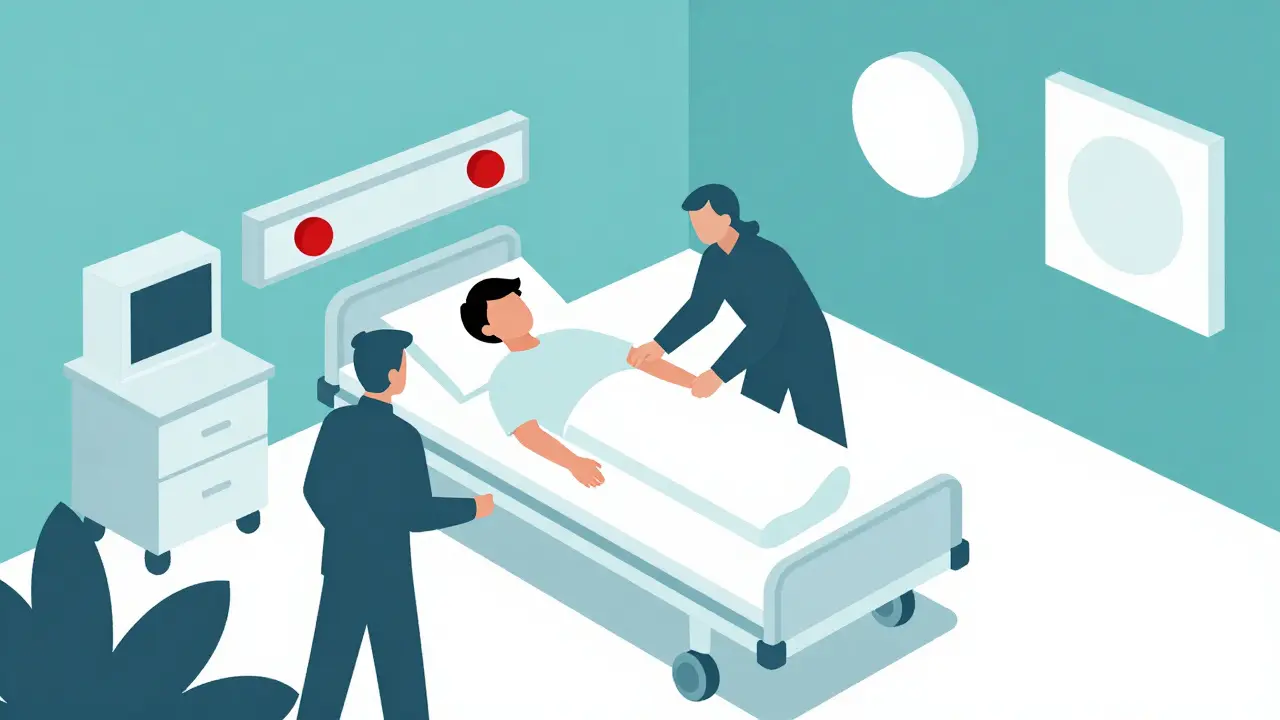
Treatment begins the moment you suspect the condition. The first step is stopping all non-essential medication immediately. Patients require immediate transfer to a burn unit or intensive care setting. Why? Because losing skin behaves exactly like having severe burns. Your body loses fluids and electrolytes rapidly, leading to shock.
Fluid resuscitation is aggressive, often requiring three to four times the normal maintenance fluid intake. Wound care is meticulous; non-adherent dressings protect the raw dermis to prevent sepsis, which is the primary cause of death along with multi-organ failure.
Medications to suppress the immune system remain debated. Early studies suggested Intravenous Immunoglobulin (IVIG) helped, but randomized trials showed no real benefit. Corticosteroids increase infection risk, so doctors use them cautiously. Cyclosporine has shown promise in some trials, reducing mortality from 33% down to 12.5%. Newer therapies like etanercept, which targets tumor necrosis factor, are showing zero mortality in small studies when given within 48 hours, but widespread adoption is still pending.
Life After Recovery
Surviving the acute phase is only half the battle. About 60% to 80% of survivors report long-term complications. Eye problems are the most persistent. Dry eye syndrome affects 35% of survivors, while corneal scarring impacts 25%, and 5% may experience blindness. Ophthalmologists must monitor these patients daily during the hospital stay to prevent symblepharon formation.
Skin texture changes permanently for many. Pigmentation issues occur in 70% of people, and 40% deal with scarring. Nails often stop growing properly or fall off entirely. Internally, scar tissue can narrow the urethra or vagina, requiring surgery later. Psychologically, the trauma is deep. Roughly 40% of survivors develop PTSD related to the traumatic hospital experience. Support groups and mental health care are vital parts of long-term management.
Is Stevens-Johnson Syndrome contagious?
No, SJS is not contagious. It is an internal immune reaction to triggers like drugs or infections, not a virus that spreads between people through touch or air.
Can you survive Toxic Epidermal Necrolysis?
Yes, survival is possible, though mortality rates are higher for TEN (around 25%) compared to SJS. Immediate discontinuation of the causative drug and rapid transport to a burn center significantly improve survival odds.
What medications cause SJS/TEN?
The most common causes are antiepileptics (carbamazepine), sulfonamide antibiotics, and allopurinol. NSAIDs and nevirapine are also known triggers. Genetic testing can identify susceptibility before starting these drugs.
How fast does the rash develop?
It typically develops within 1-3 weeks of starting a new medication, though re-exposure to the drug can trigger symptoms as fast as 48 hours. The prodromal flu-like phase lasts 1-3 days before skin changes appear.
What are the long-term side effects?
Common long-term effects include chronic dry eyes, vision loss, skin scarring, pigmentation changes, nail loss, and urethral strictures. Psychological trauma (PTSD) is also common among survivors.
