
Amazon RxPass: What It Is, How It Works, and What It Means for Your Medication Costs
When you hear Amazon RxPass, a monthly subscription service that offers unlimited access to hundreds of generic prescription drugs at a fixed low price. It’s not insurance, but it acts like a discount plan designed to simplify how you pay for everyday medications. Many people don’t realize how much they’re spending on generics—drugs like metformin, lisinopril, or atorvastatin—that cost less than $10 a month in many cases, yet still add up over time. generic drugs, medications that are chemically identical to brand-name versions but sold at a fraction of the cost. They’re approved by the FDA and work the same way, yet most insurance plans still make you pay copays or coinsurance. Amazon RxPass removes that barrier entirely.
How does it actually work? For $5 a month, or $30 a year, you get unlimited access to over 1,000 generic medications delivered to your door. No copays. No prior authorizations. No surprise bills. The service covers the most commonly prescribed drugs for high blood pressure, diabetes, cholesterol, thyroid issues, and depression. It doesn’t cover brand-name drugs, specialty meds, or controlled substances—so if you’re on a complex regimen, it won’t replace your insurance, but it can still save you hundreds a year on your routine pills. pharmacy benefits, the structure of how health plans and services manage prescription drug access and pricing. Most pharmacy benefits are tied to insurance formularies, tiered pricing, and network restrictions. Amazon RxPass cuts through that noise by offering a flat fee model, similar to how Netflix gives you access to content without charging per movie. This is especially useful for people on high-deductible plans, Medicare Part D beneficiaries facing the coverage gap, or anyone without insurance at all.
It’s not magic—it’s logistics. Amazon uses its scale to buy generics in bulk, negotiates directly with manufacturers, and ships them through its own pharmacy network. That’s why prices stay low. But it’s not for everyone. If you take a lot of non-generic drugs, or need medications that aren’t on their list, the savings won’t be as clear. Still, for the millions who rely on daily pills for chronic conditions, this could be the simplest way to cut costs without changing insurers or jumping through hoops. The real win? You stop worrying about whether you can afford your next refill.
Below, you’ll find real-world guides on how generic drugs work, how insurance tiers affect your out-of-pocket costs, what makes a drug single-source versus multi-source, and how to spot hidden risks in your medication routine. These aren’t theoretical articles—they’re practical tools to help you understand what you’re paying for, why, and how to do better. Whether you’re comparing RxPass to other discount programs or just trying to make sense of your prescription bill, the posts here give you the facts you need—no fluff, no jargon, just clear answers.
App-Based Prescribing: Best Platforms for Getting Generic Medications in 2025
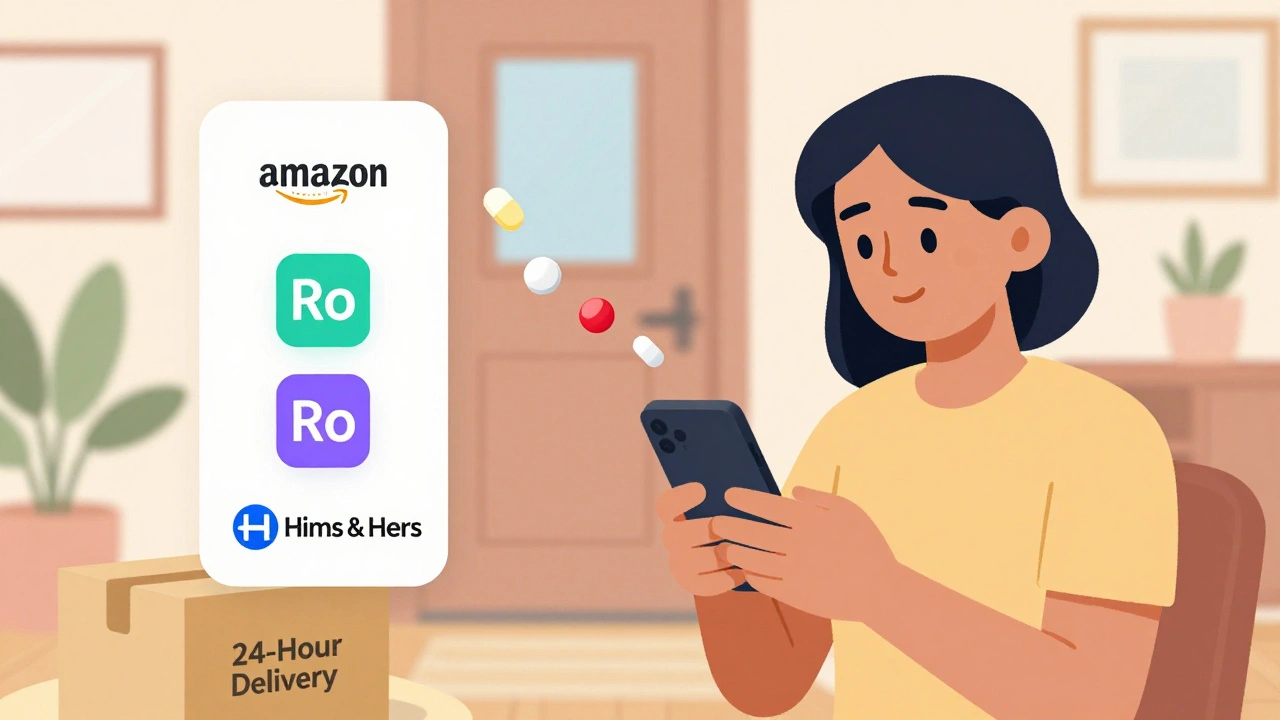
Discover the top app-based prescribing platforms in 2025 for affordable generic medications. Learn how Amazon RxPass, Ro, Hims & Hers, and Beem Health compare - and how to use them safely.
- December 1 2025
- Tony Newman
- 10 Comments