
Amiodarone, Digoxin, and Warfarin Interaction: What You Need to Know
When you take amiodarone, a powerful heart rhythm medication used for serious arrhythmias along with digoxin, a drug that helps the heart pump more efficiently and warfarin, a blood thinner that prevents dangerous clots, you’re stacking three high-risk medications that don’t just coexist—they change each other. This isn’t a simple combo. It’s a chemical tug-of-war inside your body that can lead to overdose, bleeding, or heart failure if you’re not careful. The amiodarone digoxin warfarin interaction is one of the most dangerous drug trios in cardiology, and it’s not rare.
Amiodarone doesn’t just sit there. It slows down how your liver breaks down both digoxin and warfarin, making them build up to toxic levels even if you’re taking the same dose you’ve always taken. Digoxin levels can spike, causing nausea, blurry vision, or a dangerously slow heartbeat. Warfarin’s effect gets stronger, pushing your INR higher and increasing your risk of bleeding—sometimes without warning. A study in the Journal of the American College of Cardiology found that nearly 1 in 5 patients on all three drugs needed emergency dose adjustments within the first month. You don’t need to be on all three at once for this to matter. If you switch from one to another, or start a new supplement, the risk stays high for weeks. Even small changes in diet, like eating more leafy greens, can throw your warfarin off balance when amiodarone is in the mix.
This isn’t about avoiding meds. It’s about managing them smartly. Many people on these drugs have atrial fibrillation, heart failure, or a history of clots—conditions that need treatment. But safety comes from knowing how they interact, not just taking them. Regular blood tests for INR and digoxin levels aren’t optional—they’re your early warning system. Tell every doctor, pharmacist, and even your chiropractor about this combo. Don’t assume a new OTC painkiller or herbal supplement is safe. Ginkgo, St. John’s wort, or even high-dose vitamin E can make things worse. And if you start feeling off—dizziness, unusual bruising, skipped beats, or fatigue—don’t wait. These aren’t side effects you should tough out. They’re signals your body is under stress from this interaction.
What follows are real-world stories, science-backed checks, and practical steps from posts that help you spot trouble before it hits. You’ll find guides on how to track your meds, understand blood test results, and talk to your doctor about alternatives. Some posts show how to reduce risks without stopping treatment. Others warn about hidden triggers, like changing brands of generic warfarin or skipping a dose because you feel fine. This isn’t theory. It’s what people who’ve been through this are sharing so you don’t have to learn the hard way.
Amiodarone, Digoxin, and Warfarin: The Dangerous Drug Triad You Can't Ignore
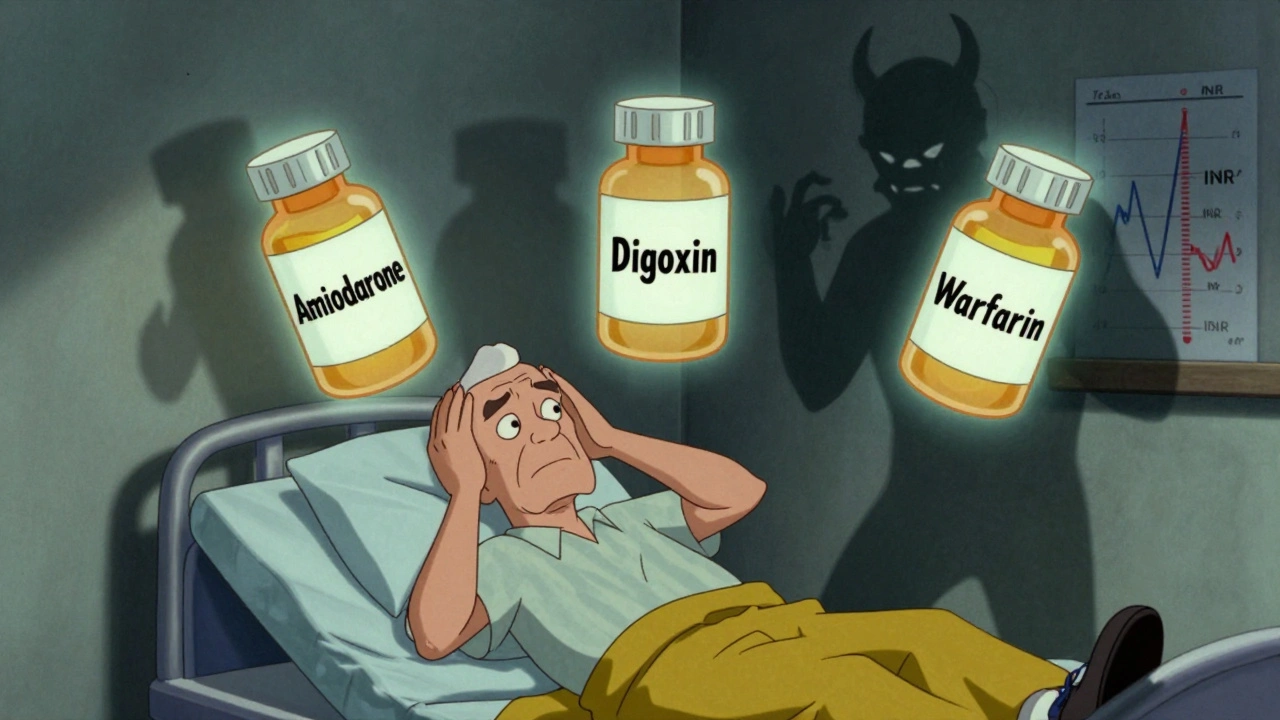
Amiodarone, digoxin, and warfarin together create a deadly drug interaction that can cause toxic digoxin levels and life-threatening bleeding. Learn how to spot the signs, adjust doses safely, and protect yourself or a loved one.
- December 4 2025
- Tony Newman
- 8 Comments