
Amiodarone Toxicity: Signs, Risks, and What to Do If You're Taking It
When you take amiodarone, a powerful antiarrhythmic drug used to treat serious heart rhythm problems. Also known as Cordarone or Pacerone, it saves lives—but it doesn’t play nice with your body over time. This isn’t a drug you take for a week. It’s often prescribed for months or years, and that’s where trouble hides. Unlike most medications, amiodarone builds up in your fat and organs, slowly turning from treatment to threat.
One of the most dangerous outcomes is amiodarone lung toxicity, a condition where the drug causes inflammation and scarring in the lungs. It mimics pneumonia or COPD—cough, shortness of breath, fatigue—but won’t respond to antibiotics or inhalers. If you’ve been on amiodarone for over six months and feel winded climbing stairs, don’t brush it off. The liver, the organ that breaks down drugs like amiodarone can get damaged too, showing up as yellow skin, dark urine, or unexplained nausea. And then there’s the thyroid, a gland that regulates metabolism and is highly sensitive to iodine. Amiodarone is packed with iodine, and that throws your thyroid into chaos—either overactive or underactive, both serious.
These aren’t rare side effects. Studies show up to 1 in 5 long-term users develop some form of amiodarone toxicity. And here’s the kicker: symptoms can show up months—even years—after you start taking it. Many doctors don’t connect the dots because the drug is so effective at controlling heart rhythms. But if you’re on it, you need to be proactive. Blood tests, chest X-rays, and thyroid panels aren’t optional—they’re your early warning system.
The good news? Catching it early means you can stop the damage. Sometimes, just lowering the dose helps. Other times, switching to a different medication is the only safe move. But you can’t do that without knowing what to look for. Below, you’ll find real-world insights from people who’ve been there—what symptoms they ignored, how they finally got answers, and what tests actually matter. This isn’t theory. It’s what works when your life depends on catching a silent killer before it’s too late.
Amiodarone, Digoxin, and Warfarin: The Dangerous Drug Triad You Can't Ignore
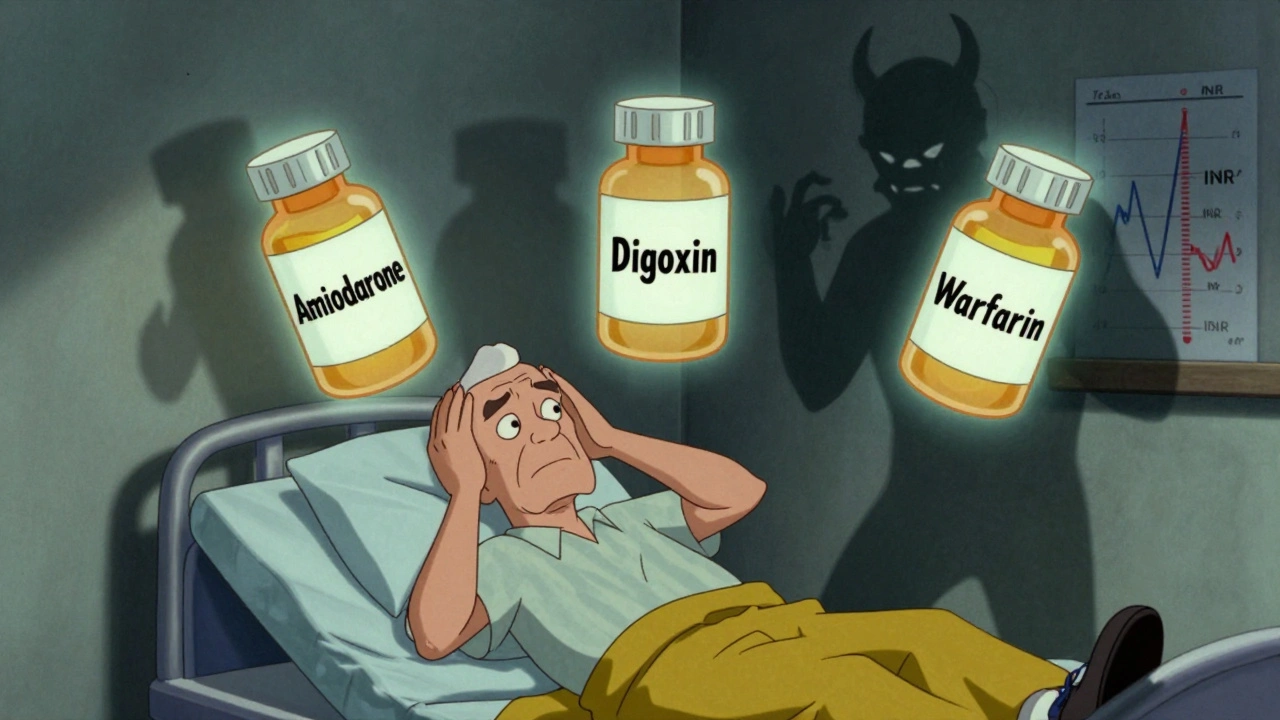
Amiodarone, digoxin, and warfarin together create a deadly drug interaction that can cause toxic digoxin levels and life-threatening bleeding. Learn how to spot the signs, adjust doses safely, and protect yourself or a loved one.
- December 4 2025
- Tony Newman
- 8 Comments