
Andexanet Alfa: What It Is, How It Reverses Blood Thinners, and Why It Matters
When someone on a direct oral anticoagulant (DOAC) like apixaban or rivaroxaban suffers a serious bleed, time is everything. That’s where andexanet alfa, a specific reversal agent designed to counteract factor Xa inhibitors. It’s not a general blood thinner antidote—it’s precision medicine for a narrow, high-stakes situation. Unlike warfarin, which can be reversed with vitamin K or fresh frozen plasma, DOACs don’t respond to those methods. Andexanet alfa was developed to fill that gap. It works by binding to the anticoagulant molecules in the bloodstream, neutralizing them so the body can clot again. Think of it like a sponge soaking up the drug before it can keep thinning the blood.
This isn’t just theoretical. In real-world emergencies—like a brain bleed, major trauma, or uncontrolled gastrointestinal bleeding—andexanet alfa can turn the tide. Studies show it restores clotting function within minutes, often faster than any other option. But it’s not for everyone. It’s only approved for patients taking apixaban, rivaroxaban, edoxaban, or dabigatran (in some regions), and only when bleeding is life-threatening or doesn’t respond to standard care. It’s expensive, requires IV infusion, and isn’t something you’d use for minor bruising or nosebleeds. The decision to use it involves weighing risk, timing, and access. Hospitals that treat high-risk patients on DOACs often keep it on hand, but you won’t find it in your local pharmacy.
Andexanet alfa doesn’t exist in a vacuum. It’s part of a bigger picture that includes DOACs, modern blood thinners that replaced warfarin for many patients due to fewer dietary restrictions and no routine monitoring, and anticoagulants, the broader category of drugs that prevent dangerous clots but carry bleeding risks. It also connects to clotting disorders, conditions where the body either clots too much or too little, and the careful balancing act doctors perform when prescribing these drugs. The same patients who need DOACs for atrial fibrillation or deep vein thrombosis are often older, on multiple medications, and at higher risk for falls or internal bleeding. That’s why knowing how to reverse them isn’t optional—it’s essential.
What you’ll find in the posts below isn’t just a list of articles. It’s a practical toolkit for understanding how blood thinners work, when they go wrong, and what options exist when things escalate. You’ll see how andexanet alfa fits into real clinical decisions, how it compares to other reversal strategies, and why some patients still end up on older drugs like warfarin despite newer options. There are also posts on drug interactions, bleeding risks from supplements like ginkgo, and how to manage anticoagulation safely at home. This isn’t just about one drug—it’s about how modern medicine handles the trade-offs between preventing clots and avoiding deadly bleeds, and what patients and families need to know to stay safe.
Anticoagulant Reversal Agents: Idarucizumab, Andexanet Alfa, PCC, and Vitamin K Explained
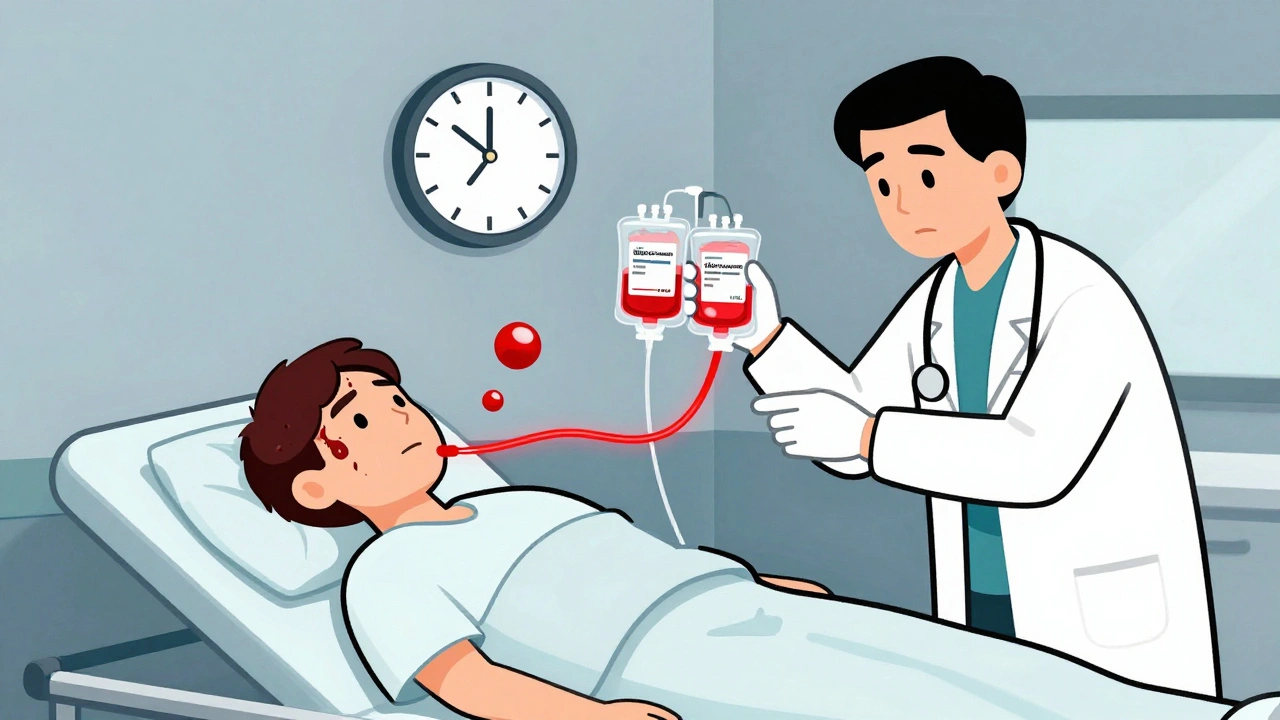
Learn how idarucizumab, andexanet alfa, PCC, and vitamin K reverse blood thinners in emergencies. Compare speed, safety, cost, and real-world use for warfarin and DOACs.
- December 6 2025
- Tony Newman
- 13 Comments