
Anticoagulant Reversal: How to Stop Dangerous Bleeding Fast
When someone on a blood thinner, a medication used to prevent dangerous clots. Also known as anticoagulant, it helps prevent strokes and heart attacks—but can turn deadly if bleeding starts. Anticoagulant reversal isn’t just a medical procedure—it’s a race against time. Every minute counts when a person on warfarin, apixaban, or rivaroxaban suffers a fall, head injury, or internal bleed. The goal isn’t to stop the medicine forever, but to quickly neutralize its effect so the body can clot again.
Not all blood thinners work the same way, so reversal isn’t one-size-fits-all. Warfarin, an older blood thinner that works by blocking vitamin K. Also known as Coumadin, it requires regular INR checks to stay in range. If someone on warfarin starts bleeding, doctors reach for vitamin K and fresh frozen plasma to rebuild clotting factors. But newer drugs like DOACs, direct oral anticoagulants that block specific clotting proteins. Also known as novel oral anticoagulants, they include drugs like Eliquis and Xarelto. don’t respond to vitamin K. Instead, they need specific antidotes like idarucizumab for dabigatran or andexanet alfa for factor Xa inhibitors. These are expensive, hard to get, and only work if given fast.
It’s not just about the drugs. Things like kidney function, age, and other meds play a big role. Someone on a DOAC with poor kidney health might still have the drug building up in their system days after their last dose. And if they’re also taking aspirin, ibuprofen, or even ginkgo biloba—common supplements that thin the blood—the risk multiplies. That’s why knowing what else you’re taking matters just as much as knowing which blood thinner you’re on.
You don’t need to memorize all the reversal agents, but you should know the signs: unexplained bruising, blood in urine or stool, severe headaches after a bump, or bleeding that won’t stop. If you’re on a blood thinner and any of this happens, don’t wait. Call 911. Emergency teams carry reversal tools, but they need to act fast.
The posts below cover everything you need to understand this topic fully—from how doctors choose reversal agents, to why some people bleed more than others, to the hidden dangers of mixing supplements with anticoagulants. You’ll find real-world cases, safety tips, and clear explanations of what happens when the body can’t clot. Whether you’re on a blood thinner yourself, care for someone who is, or just want to know how these drugs really work, you’ll find answers here—no jargon, no fluff, just what matters.
Anticoagulant Reversal Agents: Idarucizumab, Andexanet Alfa, PCC, and Vitamin K Explained
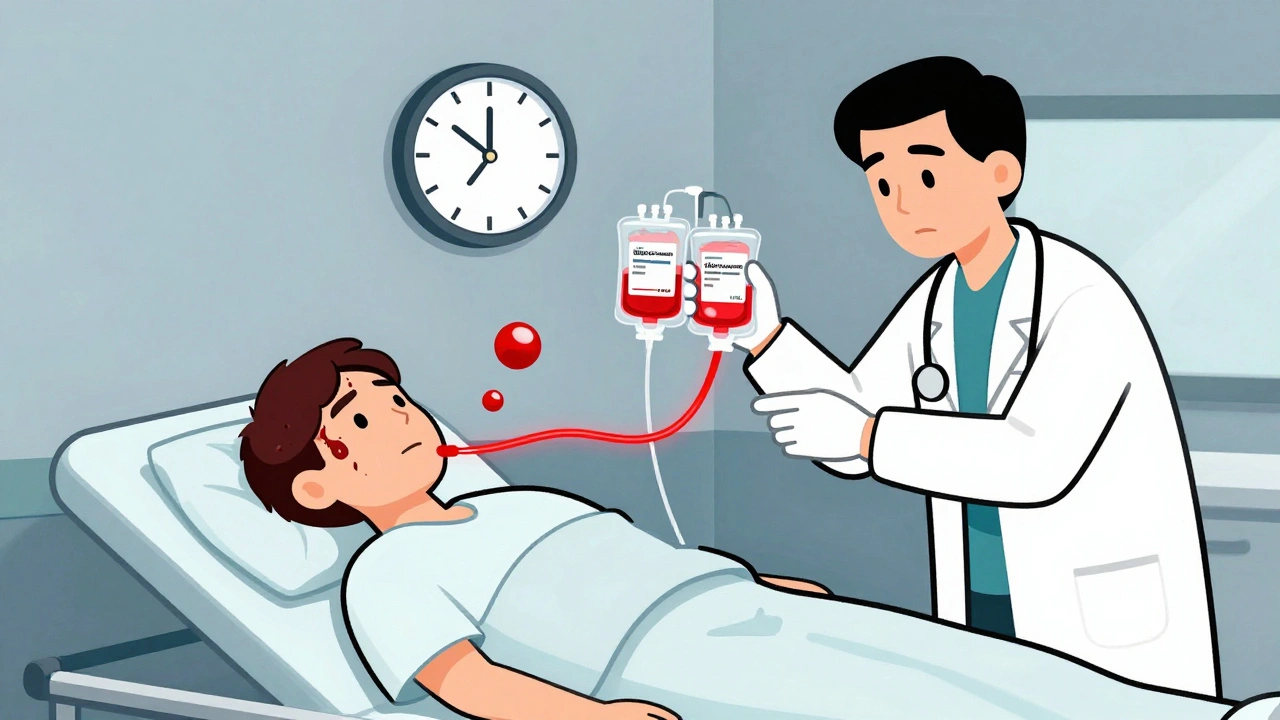
Learn how idarucizumab, andexanet alfa, PCC, and vitamin K reverse blood thinners in emergencies. Compare speed, safety, cost, and real-world use for warfarin and DOACs.
- December 6 2025
- Tony Newman
- 13 Comments