
Compression Therapy for Edema: What Works, What Doesn't, and What You Need to Know
When your legs feel heavy, swollen, or tight, you’re not just tired—you might be dealing with edema, a buildup of fluid in tissues that causes visible swelling, often in the legs, ankles, or feet. Also known as fluid retention, it’s not just a nuisance—it can signal deeper issues like heart failure, kidney problems, or poor circulation. That’s where compression therapy, a non-drug treatment using graduated pressure to move fluid out of swollen areas comes in. It’s not magic, but it’s one of the few proven, low-risk ways to manage swelling without pills or surgery.
Compression therapy isn’t just about wearing socks. It includes compression stockings, elastic garments that apply tighter pressure at the ankles and gradually loosen toward the knees or thighs, bandages, pumps, and even specialized wraps. These work by squeezing the veins and muscles, helping blood and lymph fluid flow back toward the heart instead of pooling in the lower limbs. People with venous insufficiency, a condition where leg veins struggle to send blood upward, see the clearest results. So do those recovering from surgery, pregnant women, or anyone with lymphedema—swelling caused by a damaged or blocked lymph system.
But not all compression is created equal. Too little pressure does nothing. Too much can cut off circulation and make things worse. The right level depends on your condition. Mild swelling from standing all day? A 15-20 mmHg stocking might be enough. Severe lymphedema? You might need 40-50 mmHg, and that’s something a specialist should fit and prescribe. Many people buy cheap compression socks online and wonder why they don’t help. The difference isn’t just price—it’s medical-grade design and proper fit.
It’s also not a cure. Compression therapy manages symptoms. It won’t fix your heart, your kidneys, or your lymph nodes. But when paired with movement, elevation, and healthy habits, it can dramatically improve daily life. Think of it like a brace for your legs—supporting what’s weak so you can move better and feel lighter.
You’ll find posts here that dig into real-world cases: how someone with chronic swelling avoided hospital visits using daily compression, why some people stop wearing stockings after a few weeks (and what to do about it), and which over-the-counter options actually meet medical standards. We’ll also cover what to watch for—like skin redness, numbness, or worsening swelling—because compression isn’t risk-free if used wrong. And yes, we’ve included what the FDA and clinical guidelines say about when compression therapy should be your first step, not your last.
Whether you’re dealing with swelling from sitting too long, after surgery, or because of a long-term condition, the right compression can make a real difference. The key isn’t just wearing something tight—it’s wearing the right thing, the right way, at the right time. Below, you’ll find real stories, practical tips, and hard facts about what works—and what doesn’t—when it comes to managing edema without relying on drugs.
Edema in CKD: How Diuretics, Salt Restriction, and Compression Therapy Work Together
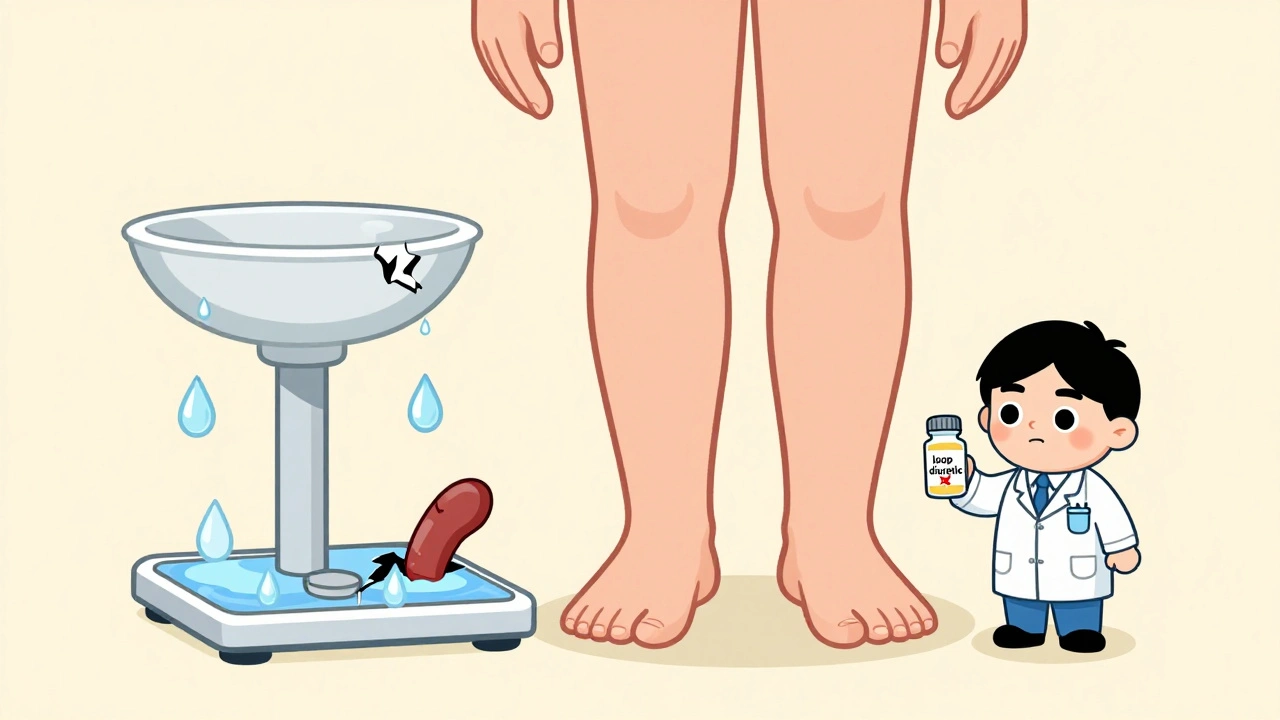
Learn how diuretics, salt restriction, and compression therapy work together to manage edema in chronic kidney disease. Evidence-based strategies to reduce swelling, protect kidney function, and improve daily life.
- December 4 2025
- Tony Newman
- 8 Comments