
Diuretics for Kidney Disease: What You Need to Know
When your kidneys aren’t filtering well, fluid builds up in your body—that’s where diuretics for kidney disease, medications that help your body get rid of extra fluid through urine. Also known as water pills, they’re one of the most common tools doctors use to manage swelling, high blood pressure, and breathing problems in people with chronic kidney disease. They don’t fix kidney damage, but they take the pressure off your heart and lungs by reducing fluid overload.
Not all diuretics are the same. loop diuretics, like furosemide and bumetanide, act on the loop of Henle in the kidney to remove large amounts of fluid quickly—these are often the first choice for advanced kidney disease. thiazide diuretics, like hydrochlorothiazide, work lower in the kidney and are better for early-stage disease or mild fluid retention. Then there’s spironolactone, a potassium-sparing diuretic that helps balance electrolytes but needs careful monitoring because kidney patients often have trouble clearing potassium.
People on these meds need to watch for side effects like dizziness, low sodium, or muscle cramps. Too much fluid loss can drop your blood pressure too low, especially if you’re also on blood pressure meds. And while diuretics help with swelling, they don’t replace the need for diet changes—cutting salt is just as important as taking the pill. Many patients report feeling better within days, but others need dose adjustments every few weeks as their kidney function shifts.
What you won’t find in most doctor’s office handouts is how often these meds are mixed with other drugs. For example, if you’re taking warfarin or digoxin, diuretics can change how those drugs work in your body. That’s why tracking your weight daily and noting changes in urination or energy levels matters more than you think. It’s not just about taking the pill—it’s about knowing how your body responds.
There’s no one-size-fits-all plan. Someone with Stage 3 CKD might do fine on a low-dose thiazide, while someone with Stage 5 might need a combination of loop and potassium-sparing diuretics. The goal isn’t to make you pee more—it’s to help you breathe easier, move without swelling, and avoid hospital visits from fluid overload.
Below, you’ll find real patient stories, doctor-recommended tips, and warnings about dangerous drug combos that could put you at risk. These aren’t theoretical advice—they’re lessons from people who’ve been there, and the research that backs them up.
Edema in CKD: How Diuretics, Salt Restriction, and Compression Therapy Work Together
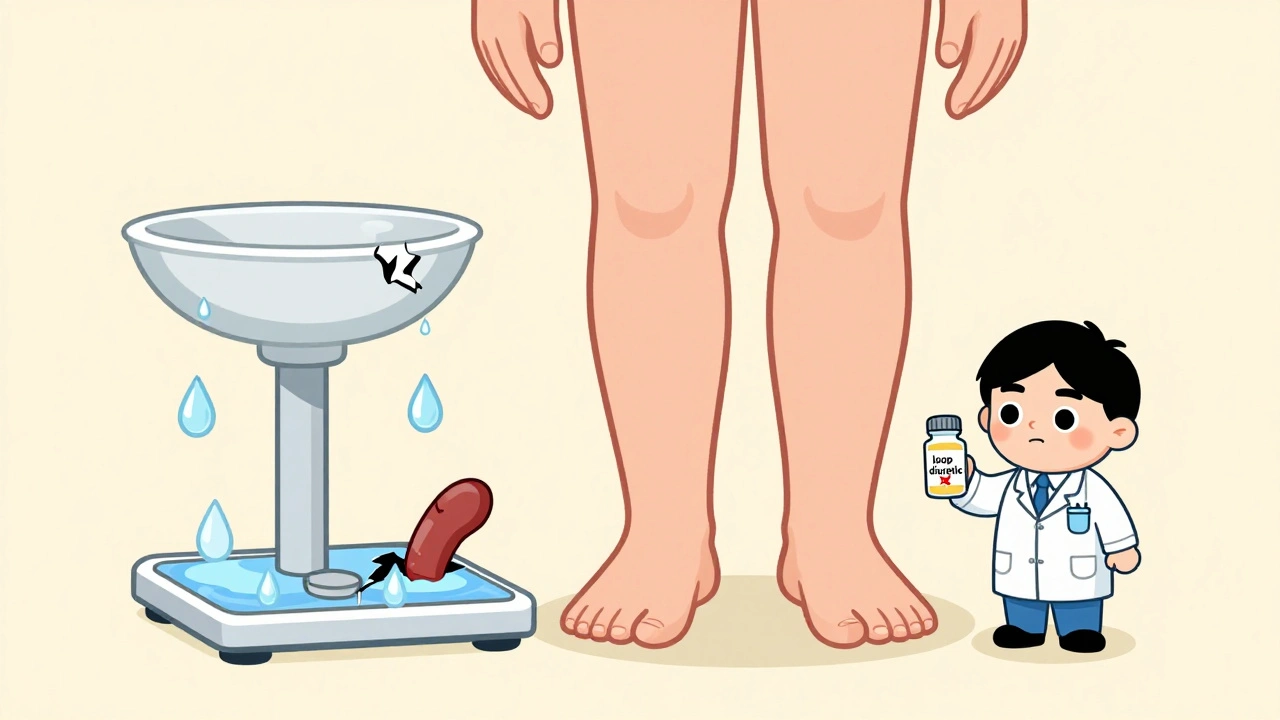
Learn how diuretics, salt restriction, and compression therapy work together to manage edema in chronic kidney disease. Evidence-based strategies to reduce swelling, protect kidney function, and improve daily life.
- December 4 2025
- Tony Newman
- 8 Comments