
Drug Interactions with Heart Medication: What You Need to Know
When you take drug interactions with heart medication, harmful overlaps between medications that can change how your heart responds or increase side effects. Also known as medication conflicts, these happen when two or more drugs affect each other’s absorption, breakdown, or action in your body—sometimes with life-threatening results. Your heart meds aren’t just pills—they’re finely tuned tools. Mixing them with the wrong other substances can turn a life-saving treatment into a hidden risk.
Take blood thinners, medications like warfarin, apixaban, or clopidogrel that prevent dangerous clots. They’re often prescribed after a heart attack, stroke, or for irregular heartbeat. But if you add something like Ginkgo Biloba, a popular herbal supplement used for memory and circulation, you’re doubling the bleeding risk. Same goes for NSAIDs like ibuprofen—common for headaches or joint pain—but they can spike your blood pressure and strain your kidneys when paired with heart meds. Even grapefruit juice isn’t harmless. It blocks enzymes your liver uses to break down statins and some beta blockers, causing toxic buildup.
Beta blockers, drugs like bisoprolol or metoprolol that slow your heart rate and lower blood pressure are another area where interactions sneak up. Mixing them with certain antidepressants, antiarrhythmics, or even over-the-counter cold medicines containing pseudoephedrine can cause your heart to slow too much—or worse, trigger dangerous rhythms. And if you’re on calcium channel blockers, medications like amlodipine or diltiazem that relax blood vessels, avoid grapefruit, black licorice, or St. John’s wort. These can either make your blood pressure drop too low or cancel out the drug’s effect entirely.
You don’t need to memorize every possible combo. But you do need to know your own meds, ask your pharmacist about new prescriptions, and speak up if you start a supplement—even if it’s labeled "natural." Many people think herbs are safe because they’re plant-based, but Ginkgo, evening primrose oil, and garlic supplements all have documented risks with heart drugs. Your body doesn’t care if something is natural or synthetic—it only reacts to the chemicals.
What you’ll find below are real, evidence-based posts that break down exactly which combinations to avoid, how to spot early warning signs of trouble, and what to do if you’re already mixing risky meds. These aren’t theoretical warnings—they’re lessons from patients who learned the hard way, and from doctors who’ve seen the results. Whether you’re on a beta blocker, a blood thinner, or a mix of heart meds, this collection gives you the clear, no-fluff facts to protect yourself.
Amiodarone, Digoxin, and Warfarin: The Dangerous Drug Triad You Can't Ignore
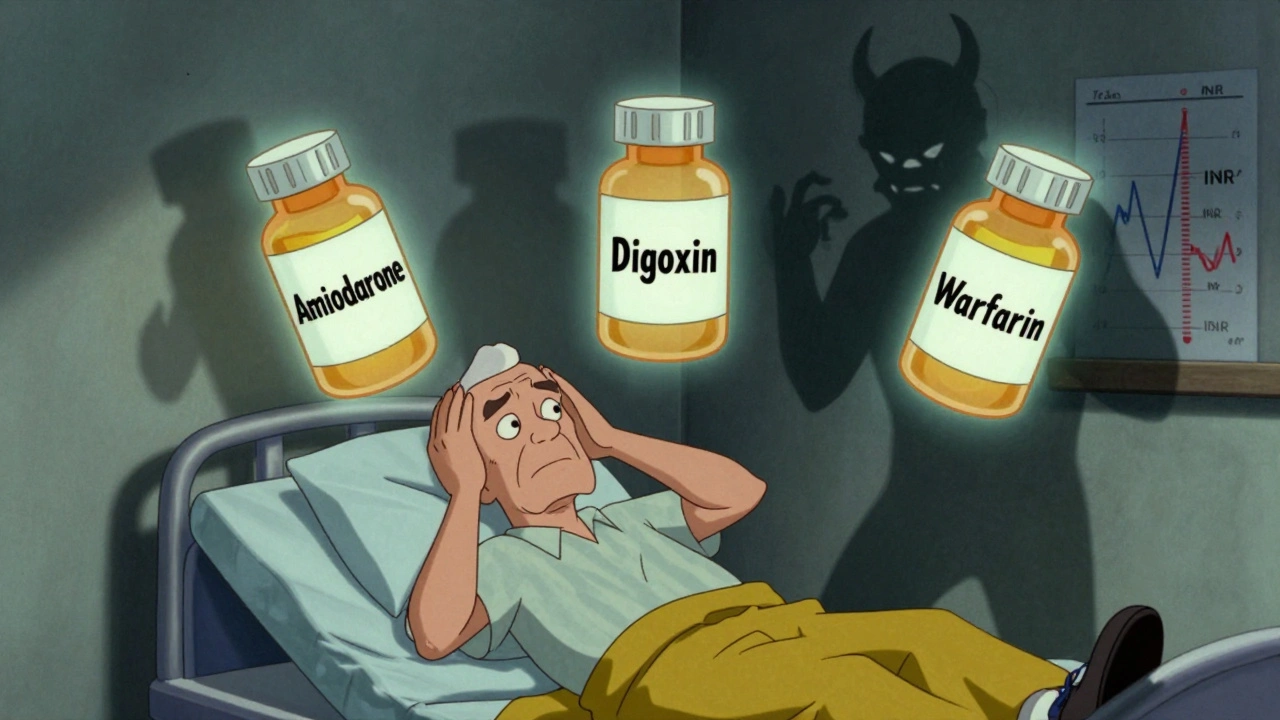
Amiodarone, digoxin, and warfarin together create a deadly drug interaction that can cause toxic digoxin levels and life-threatening bleeding. Learn how to spot the signs, adjust doses safely, and protect yourself or a loved one.
- December 4 2025
- Tony Newman
- 8 Comments