
Edema in CKD: Causes, Risks, and What You Can Do
When your kidneys can’t filter fluid properly, edema in CKD, swelling caused by fluid retention due to chronic kidney disease becomes a warning sign you can’t ignore. It’s not just puffy ankles—this is your body telling you the balance between salt, water, and waste is broken. People with chronic kidney disease, a progressive loss of kidney function over time often notice swelling in their legs, feet, or even around the eyes first. That’s because damaged kidneys hold onto sodium and water instead of flushing them out, and the extra fluid leaks into surrounding tissues.
This isn’t just about comfort. fluid retention, the abnormal accumulation of liquid in body tissues in CKD can raise blood pressure, strain your heart, and make breathing harder if it builds up in the lungs. It’s closely tied to renal edema, swelling specifically caused by kidney dysfunction, which responds differently than swelling from heart or liver issues. You can’t just drink less water and expect it to fix itself—your kidneys need help regulating what stays and what goes. That’s why diet, medication, and monitoring aren’t optional. Many people with CKD are told to limit salt, track daily weight, and take diuretics—but knowing why matters just as much as doing it.
The posts below cover the real-world side of managing edema in CKD: how protein intake affects fluid balance, why some blood pressure meds work better than others, what happens when you skip your diuretic, and how to spot when swelling turns dangerous. You’ll also find clear advice on what to eat, what to avoid, and how to talk to your doctor about your symptoms without sounding confused. This isn’t theory—it’s what works for people living with this condition every day.
Edema in CKD: How Diuretics, Salt Restriction, and Compression Therapy Work Together
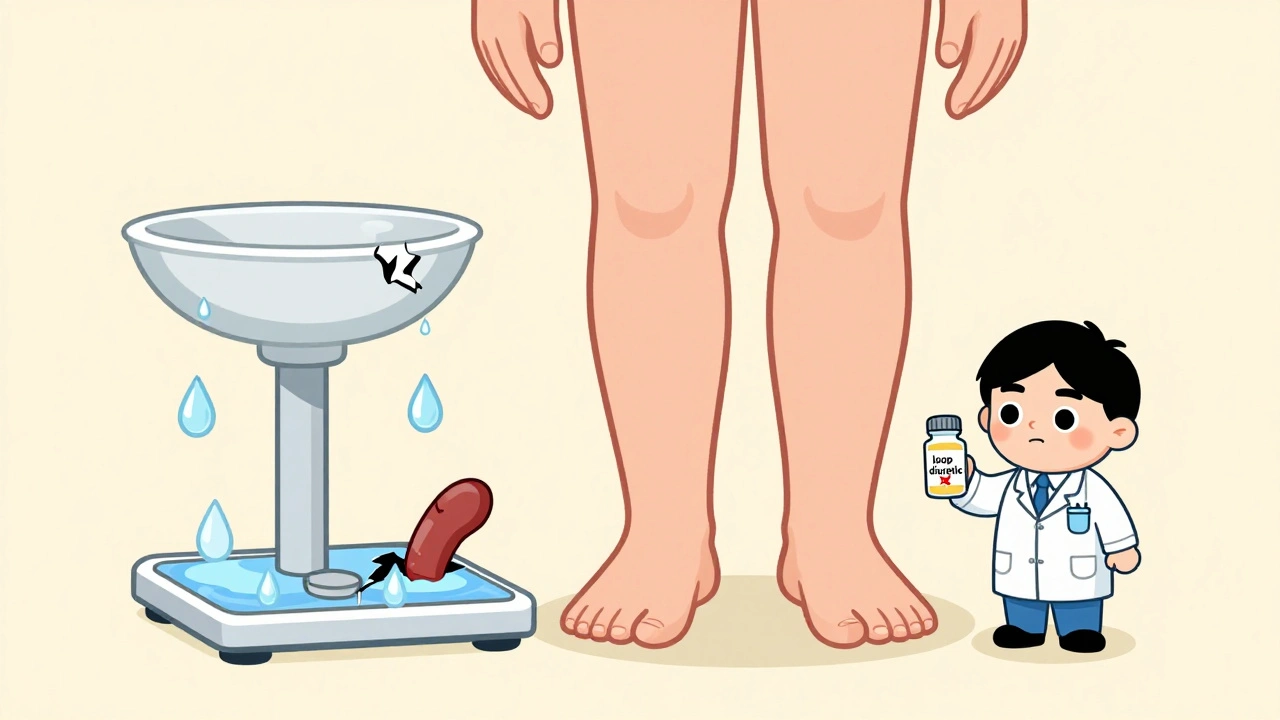
Learn how diuretics, salt restriction, and compression therapy work together to manage edema in chronic kidney disease. Evidence-based strategies to reduce swelling, protect kidney function, and improve daily life.
- December 4 2025
- Tony Newman
- 8 Comments