
Idarucizumab: What It Is, How It Reverses Blood Thinners, and When It's Used
When someone on idarucizumab, a specific antidote used to reverse the effects of the blood thinner dabigatran. Also known as Praxbind, it is not a general blood thinner itself—it’s the emergency fix when things go wrong. Idarucizumab is the only drug approved to instantly undo the anticoagulant effect of dabigatran, the active ingredient in Pradaxa. This matters because dabigatran is widely prescribed for atrial fibrillation and deep vein thrombosis, and when a patient has a major bleed or needs urgent surgery, waiting for the drug to wear off isn’t an option.
Idarucizumab works like a molecular magnet. It binds tightly to dabigatran, neutralizing it within minutes. That’s faster than dialysis, faster than waiting for kidney clearance, and far more reliable than trying to use vitamin K or fresh frozen plasma, which don’t work on dabigatran at all. This isn’t theoretical—it’s life-saving. Studies show that within 5 minutes of giving idarucizumab, over 90% of patients see their clotting time return to normal. It’s used in ERs, trauma centers, and operating rooms when someone is bleeding uncontrollably or needs emergency brain or heart surgery.
But idarucizumab isn’t for everyone. It only works if the patient is taking dabigatran. If someone is on warfarin, rivaroxaban, or apixaban, idarucizumab does nothing. That’s why knowing what blood thinner a person is on is critical. Emergency teams need this info fast. Even if the patient can’t speak, checking their pill bottles, medical ID bracelet, or pharmacy records can save minutes—and lives. And while idarucizumab is safe, giving it unnecessarily can waste resources and mask other problems, like a bleeding ulcer or brain tumor.
It’s also important to remember that idarucizumab doesn’t last forever. Dabigatran can still be in the body, and after 24 hours, anticoagulation might return. That’s why patients who get idarucizumab often need close monitoring, sometimes even a second dose. It’s not a cure—it’s a bridge. Doctors then decide whether to restart anticoagulation, switch to another drug, or stop it entirely based on the reason the patient was on dabigatran in the first place.
Idarucizumab’s existence changes how we handle emergencies. Before it, doctors had to guess, wait, or use risky workarounds. Now, there’s a clear, fast, evidence-backed path. But it only helps if you know when to use it—and who it’s for. That’s why understanding the link between dabigatran, a direct oral anticoagulant used to prevent strokes in atrial fibrillation and idarucizumab, its specific reversal agent is as vital as knowing how to use an EpiPen for anaphylaxis.
The posts below dive into real-world scenarios where this knowledge matters: how to spot dangerous drug combinations, what to do when blood thinners go wrong, and how to protect yourself or a loved one from preventable emergencies. You’ll find guides on anticoagulant safety, bleeding risks with herbal supplements like ginkgo, and how to talk to your doctor about reversing medications in a crisis. These aren’t abstract concepts—they’re the practical steps that keep people alive.
Anticoagulant Reversal Agents: Idarucizumab, Andexanet Alfa, PCC, and Vitamin K Explained
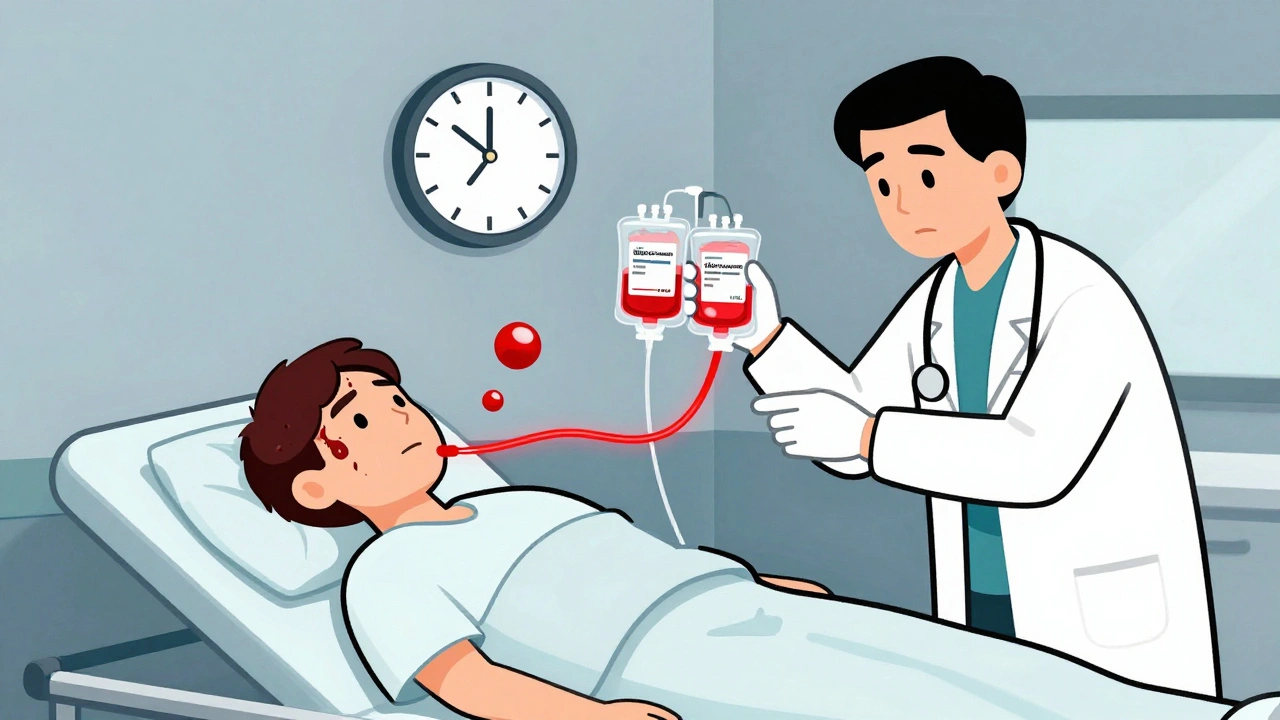
Learn how idarucizumab, andexanet alfa, PCC, and vitamin K reverse blood thinners in emergencies. Compare speed, safety, cost, and real-world use for warfarin and DOACs.
- December 6 2025
- Tony Newman
- 13 Comments