
Multimodal Pain Management: Combining Drugs, Therapy, and Lifestyle for Real Relief
When you’re dealing with chronic pain, taking one pill after another rarely solves the problem. Multimodal pain management, a strategy that combines different types of treatments to target pain from multiple angles. Also known as combination pain therapy, it’s not about finding the magic bullet—it’s about stacking smart, evidence-backed tools so they work better together than alone. This isn’t just theory. Doctors and patients are turning to this approach because single-drug treatments often come with side effects, tolerance, or limited results. Instead, multimodal pain management brings together medications, physical methods, and daily habits to cut pain at its source—without overloading your body.
Think of it like fixing a leaky roof. You don’t just patch one hole—you check the shingles, the gutters, the flashing. In pain care, that means non-opioid pain treatment, including anti-inflammatories, nerve-targeting drugs, and topical creams paired with physical therapy, like compression, movement exercises, or nerve glides. It also includes lifestyle changes, such as better sleep, stress reduction, and diet adjustments—all of which directly influence how your nerves and brain process pain signals. You’ll find posts here that explain how diuretics and salt control help reduce swelling-related pain in kidney disease, why certain drug combos like amiodarone and warfarin can make pain worse instead of better, and how simple habits like walking or reducing caffeine can lower your overall pain sensitivity.
What makes this approach powerful is that it doesn’t just mask pain—it changes how your body responds to it. A person with back pain might take a low-dose nerve pain med, use a compression sleeve to reduce inflammation, do daily stretches, and avoid sugar spikes that trigger flare-ups. Each piece supports the others. And because it avoids heavy opioid use, it reduces the risk of addiction, tolerance, and dangerous interactions—something you’ll see covered in posts about dangerous drug combinations and deprescribing. This isn’t a one-size-fits-all fix. It’s a personalized toolkit. Below, you’ll find real-world guides on how to use these tools safely, when to question your meds, and how to spot hidden triggers that keep pain alive—even when you’re doing everything "right."
Non-Opioid Alternatives for Pain Relief: Proven Multimodal Strategies That Work
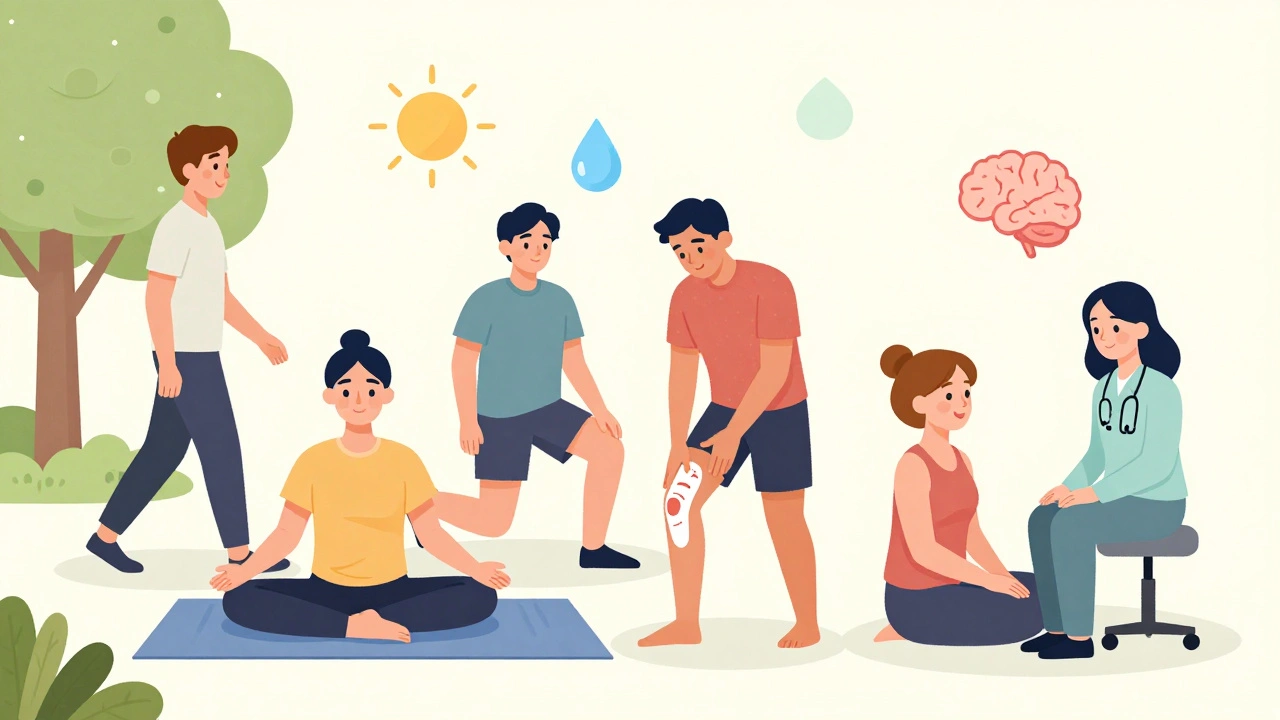
Discover proven, science-backed non-opioid pain relief strategies-from exercise and CBT to new medications like Journavx-that help manage chronic and acute pain safely and effectively without addiction risks.
- December 2 2025
- Tony Newman
- 13 Comments