
NSAIDs for Pain: What You Need to Know About Safety, Alternatives, and Side Effects
When you reach for ibuprofen or naproxen to ease a headache, sore muscles, or joint pain, you’re using a class of drugs called NSAIDs, nonsteroidal anti-inflammatory drugs that reduce pain, fever, and inflammation. Also known as nonsteroidal anti-inflammatory agents, they’re among the most widely used medications worldwide—but that doesn’t mean they’re safe for everyone. Many people think these pills are harmless because you can buy them without a prescription. But NSAIDs can quietly damage your stomach, raise your blood pressure, or even trigger heart problems, especially if taken long-term or mixed with other drugs.
One of the biggest risks? Drug interactions, how NSAIDs react dangerously with other medications like blood thinners or antidepressants. For example, taking NSAIDs with warfarin or aspirin can spike your risk of internal bleeding. Even something as simple as ginkgo biloba or evening primrose oil—often seen as "natural"—can turn into a hidden danger when combined with NSAIDs. And if you have kidney disease, these drugs can make fluid retention worse, leading to swelling and higher blood pressure. The FDA has warned about these risks for years, yet most people still don’t check with their doctor before popping a few pills daily.
Another thing most users overlook: inactive ingredients, the fillers and dyes in pills that can trigger allergies or reduce how well the drug works. One person’s pain reliever might be another person’s trigger for hives, stomach cramps, or worse. That’s why knowing exactly what’s in your medication matters—not just the active ingredient, but everything else in the capsule. And while NSAIDs are great for short-term relief, they don’t fix the root cause of pain. That’s where lifestyle changes, physical therapy, or even simple things like salt restriction and compression therapy (as seen in CKD management) can offer safer, longer-lasting results.
You’ll find real stories here—like how someone with heart disease nearly ended up in the ER after mixing naproxen with their blood thinner, or how a senior citizen reduced their pill count by switching to acetaminophen and walking daily. These aren’t hypotheticals. They’re the kinds of cases that show up in medication safety alerts from ISMP and the FDA. The posts below cover exactly what you need to know: which NSAIDs are riskiest, how to spot early signs of kidney or stomach damage, why some people should never take them, and what alternatives actually work without the side effects. No fluff. Just facts you can use today to protect your health.
Non-Opioid Alternatives for Pain Relief: Proven Multimodal Strategies That Work
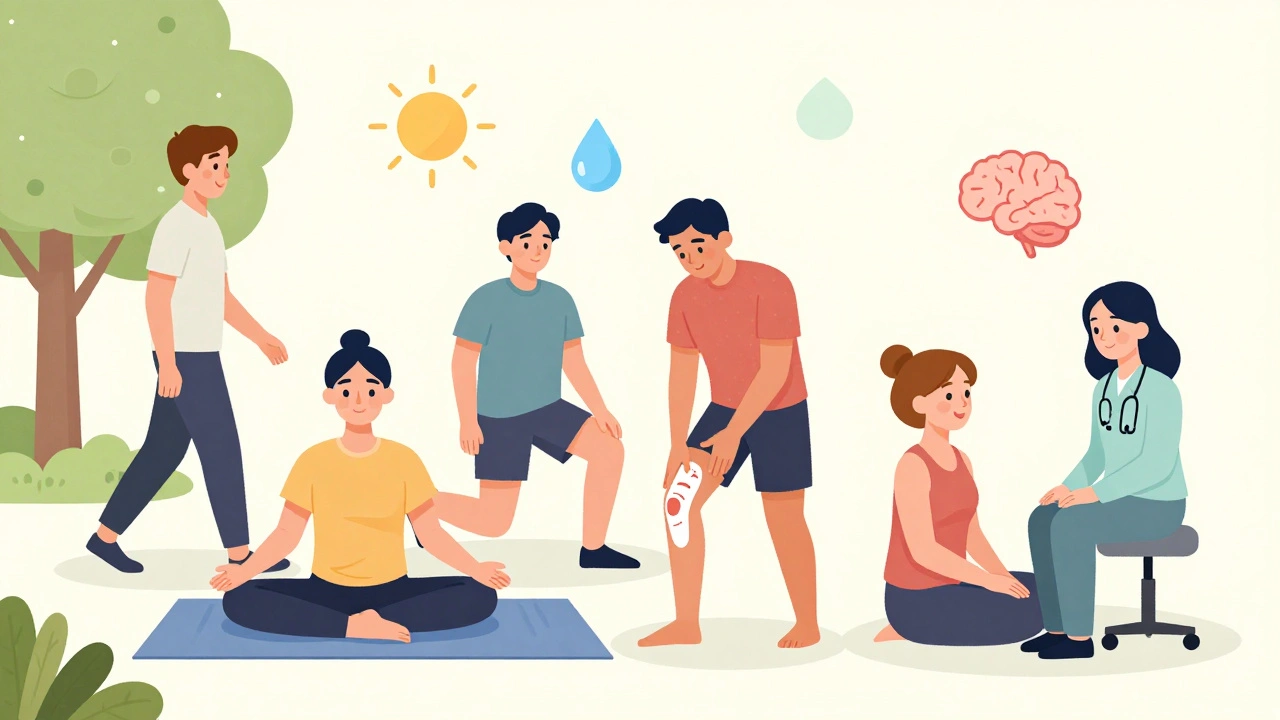
Discover proven, science-backed non-opioid pain relief strategies-from exercise and CBT to new medications like Journavx-that help manage chronic and acute pain safely and effectively without addiction risks.
- December 2 2025
- Tony Newman
- 13 Comments