
Salt Restriction for CKD: What You Need to Know About Sodium and Kidney Health
When you have chronic kidney disease, a long-term condition where kidneys lose their ability to filter waste and fluid from the blood. Also known as CKD, it means your body struggles to handle extra sodium, leading to swelling, high blood pressure, and faster damage to your kidneys. That’s why salt restriction, the deliberate reduction of sodium in your diet to protect kidney function isn’t just a suggestion—it’s one of the most effective things you can do to slow down the disease.
Too much sodium pulls water into your bloodstream, raising your blood pressure. For someone with healthy kidneys, that’s manageable. But when your kidneys are damaged, they can’t remove the extra fluid. This leads to fluid buildup in your legs, lungs, and heart. Over time, high blood pressure from salt overload forces your kidneys to work harder, making the damage worse. Studies show that people with CKD who cut back on sodium see slower decline in kidney function and fewer hospital visits for heart failure. It’s not about going zero-salt—it’s about getting it down to the level your kidneys can handle, usually under 2,000 mg a day. That’s less than one teaspoon of table salt.
Many people don’t realize how much sodium hides in food. Processed meats, canned soups, frozen meals, bread, and even breakfast cereals can pack more salt than you’d expect. Restaurant meals? Often double or triple the daily limit. You don’t need to give up flavor—use herbs, lemon, garlic, and vinegar instead. Cooking at home gives you control. And when you do buy packaged food, check the label: look for "low sodium," "no salt added," or "unsalted." Even small changes, like swapping salted snacks for unsalted nuts or choosing fresh chicken over deli meat, add up.
People with renal nutrition, the specialized dietary approach for managing kidney disease also need to balance protein, potassium, and phosphorus. But sodium is often the easiest place to start seeing results. Reducing salt helps your blood pressure meds work better, reduces swelling, and can even help you sleep better by cutting nighttime trips to the bathroom. It’s not a cure, but it’s a powerful tool that works alongside your treatment plan.
Some folks think salt restriction only matters in later stages of CKD. That’s a myth. Even in early stages, cutting sodium gives your kidneys a break and helps delay progression. And if you’re on dialysis, it’s even more critical—fluid and salt buildup between sessions can be dangerous. This isn’t about being perfect. It’s about making smarter choices every day. The posts below give you real, practical tips: how to read labels, what meals to cook, what to ask your dietitian, and how to handle cravings without going off track. You’ll find advice from people who’ve been there, backed by science, not guesswork. No fluff. Just what works.
Edema in CKD: How Diuretics, Salt Restriction, and Compression Therapy Work Together
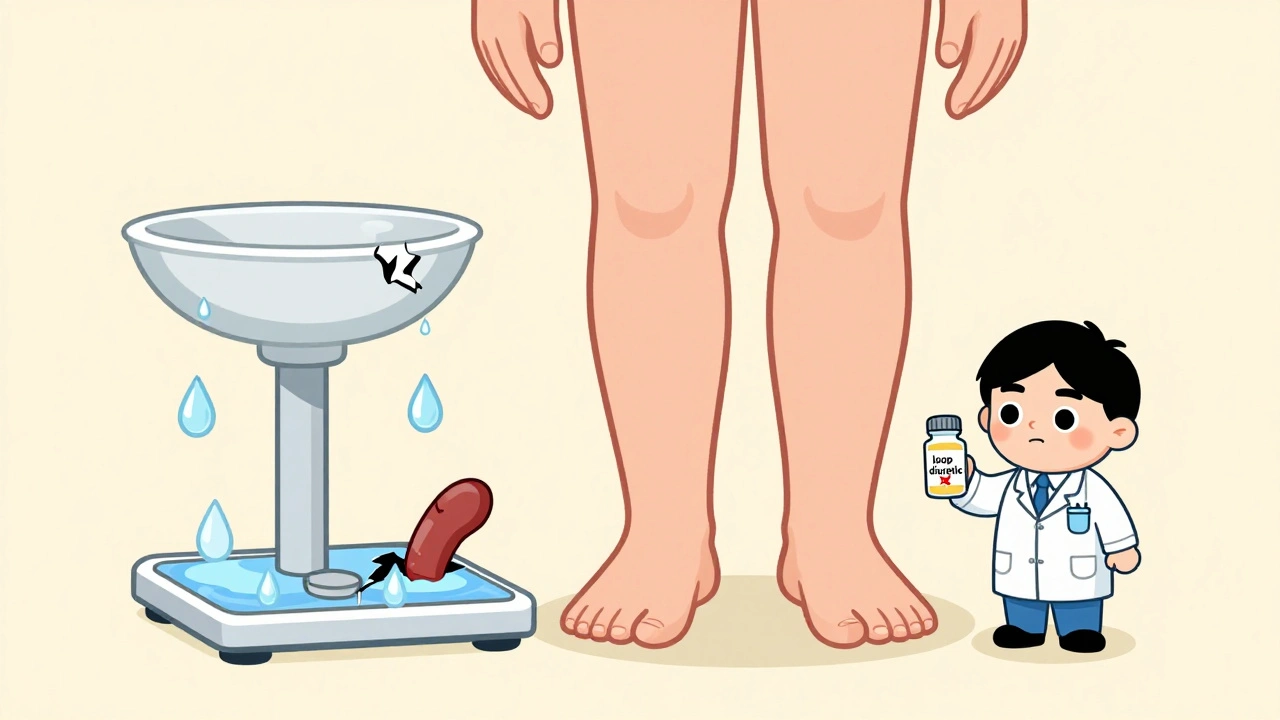
Learn how diuretics, salt restriction, and compression therapy work together to manage edema in chronic kidney disease. Evidence-based strategies to reduce swelling, protect kidney function, and improve daily life.
- December 4 2025
- Tony Newman
- 8 Comments