
Telehealth Pharmacy: How Remote Prescriptions and Digital Care Are Changing Medicine
When you need a prescription refill or advice on a new medication, you don’t always need to drive to a clinic or wait for a doctor’s office to open. Telehealth pharmacy, a system that combines virtual medical consultations with digital prescription fulfillment. Also known as online pharmacy services, it lets you talk to a licensed provider, get a prescription sent directly to your preferred pharmacy, and have your meds delivered—all from your phone or computer. This isn’t just convenience. It’s a shift in how care is delivered, especially for people managing chronic conditions, living in rural areas, or juggling work and family.
Telehealth pharmacy doesn’t replace your regular doctor. It works alongside them. You might start with a video visit for a UTI, get a prescription for antibiotics, and have it filled at your local pharmacy or delivered to your door. For ongoing meds like blood pressure or diabetes drugs, many telehealth platforms offer refill management and medication reviews. It’s especially useful when you’re traveling, sick, or can’t get an in-person appointment. But it’s not magic. You still need accurate health info, clear communication, and a provider who checks your history. The best telehealth pharmacy services tie into your electronic health record so your primary doctor stays in the loop.
Behind the scenes, telehealth pharmacy relies on several key pieces: remote prescriptions, electronic orders sent securely from a clinician to a pharmacy. Also known as e-prescriptions, they cut out handwritten notes and phone calls that can lead to errors. Then there’s online medication delivery, the logistics of getting pills, inhalers, or injectables to your home safely and on time. Also known as mail-order pharmacy, it’s often used for long-term meds and can save money through bulk pricing. And let’s not forget virtual care, the consults themselves—whether through video, chat, or phone—that make diagnosis and treatment decisions possible without physical exams. These aren’t separate tools. They’re parts of the same system, working together to keep you safe, informed, and on track with your meds.
Some people worry telehealth pharmacy skips the human touch. But the best platforms don’t. They use trained pharmacists to review your meds for interactions, send reminders when it’s time to take your pills, and answer questions about side effects. You might even get a call if your blood pressure readings look off or if your refill request comes in too early. It’s proactive, not passive. And it’s growing fast—especially after the pandemic, when millions of people tried it for the first time and kept using it.
What you’ll find in the posts below isn’t just theory. It’s real-world advice on how to use these services safely, how to spot red flags in online prescriptions, what to ask your telehealth provider, and how to avoid scams that look like legitimate telehealth pharmacy. You’ll learn how insurance covers these services, why some meds can’t be filled remotely, and how to make sure your digital care doesn’t leave gaps in your health plan. This isn’t about replacing your doctor. It’s about making sure you get the right care, at the right time, without unnecessary hassle.
App-Based Prescribing: Best Platforms for Getting Generic Medications in 2025
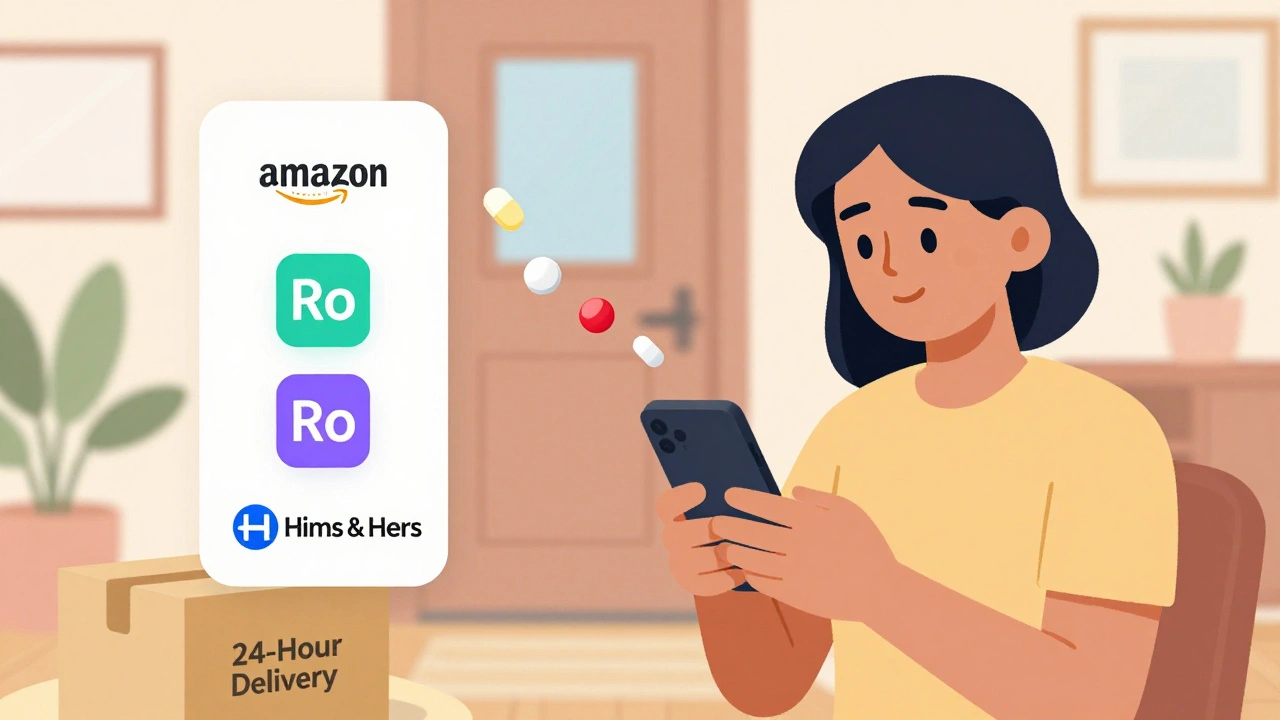
Discover the top app-based prescribing platforms in 2025 for affordable generic medications. Learn how Amazon RxPass, Ro, Hims & Hers, and Beem Health compare - and how to use them safely.
- December 1 2025
- Tony Newman
- 10 Comments