
Warfarin and Digoxin Interaction: Risks, Signs, and What to Do
When you take warfarin, a blood thinner used to prevent dangerous clots along with digoxin, a heart medication that helps control rhythm and pumping strength, you’re walking a tightrope. These two drugs don’t just coexist—they change how each other behaves in your body. Even small changes in dose, diet, or other meds can push digoxin into toxic territory while making warfarin harder to control. This isn’t theoretical. Real patients end up in the ER because their heart rate dropped too low, or they started bleeding for no clear reason. The warfarin and digoxin interaction is one of the most dangerous combos you can accidentally stumble into.
Here’s how it breaks down: digoxin doesn’t get broken down the same way as most drugs. It’s cleared mostly by the kidneys, but warfarin can slow down how fast your liver processes other things that help remove digoxin. That means digoxin builds up—sometimes slowly, sometimes suddenly. Too much digoxin causes nausea, vomiting, blurry vision, confusion, and irregular heartbeat. Meanwhile, warfarin’s job is to thin your blood by blocking vitamin K. But digoxin can make your body respond differently to warfarin, making your INR spike or drop unpredictably. That’s why people on both meds need frequent INR checks. A single blood test can catch a dangerous shift before it causes a stroke or a bleed. And it’s not just these two. If you’re also taking antibiotics like erythromycin, or even over-the-counter antacids, you’re adding fuel to the fire. The INR monitoring, a lab test that measures how long your blood takes to clot becomes your lifeline.
What does this mean for you? If you’re on both drugs, don’t change anything without talking to your doctor. Don’t start a new supplement—like ginkgo or St. John’s wort—without asking. Keep a list of every pill, vitamin, or herb you take. Write down any new symptoms: dizziness, skipped beats, unusual bruising, or feeling like you’re going to throw up. Bring that list and those notes to every appointment. Your pharmacist can also flag risky combos before you even leave the store. This isn’t about fear—it’s about awareness. Thousands of people manage both meds safely every day, but only if they know what to watch for and when to speak up. Below, you’ll find real stories and science-backed tips from posts that dig into how these drugs behave, what to do when things go sideways, and how to avoid the most common traps.
Amiodarone, Digoxin, and Warfarin: The Dangerous Drug Triad You Can't Ignore
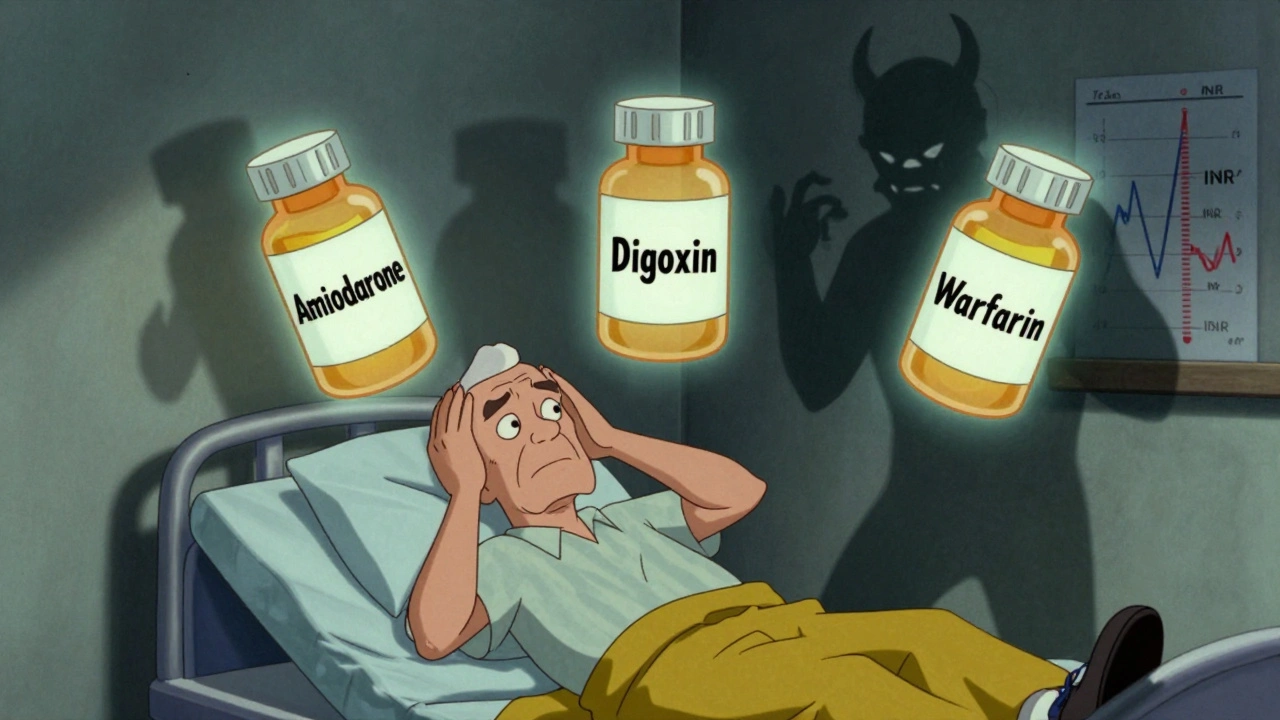
Amiodarone, digoxin, and warfarin together create a deadly drug interaction that can cause toxic digoxin levels and life-threatening bleeding. Learn how to spot the signs, adjust doses safely, and protect yourself or a loved one.
- December 4 2025
- Tony Newman
- 8 Comments