
Therapeutic Equivalence Code Checker
Check Therapeutic Equivalence Code
Enter a brand-name drug to see if it has therapeutically equivalent generics available.
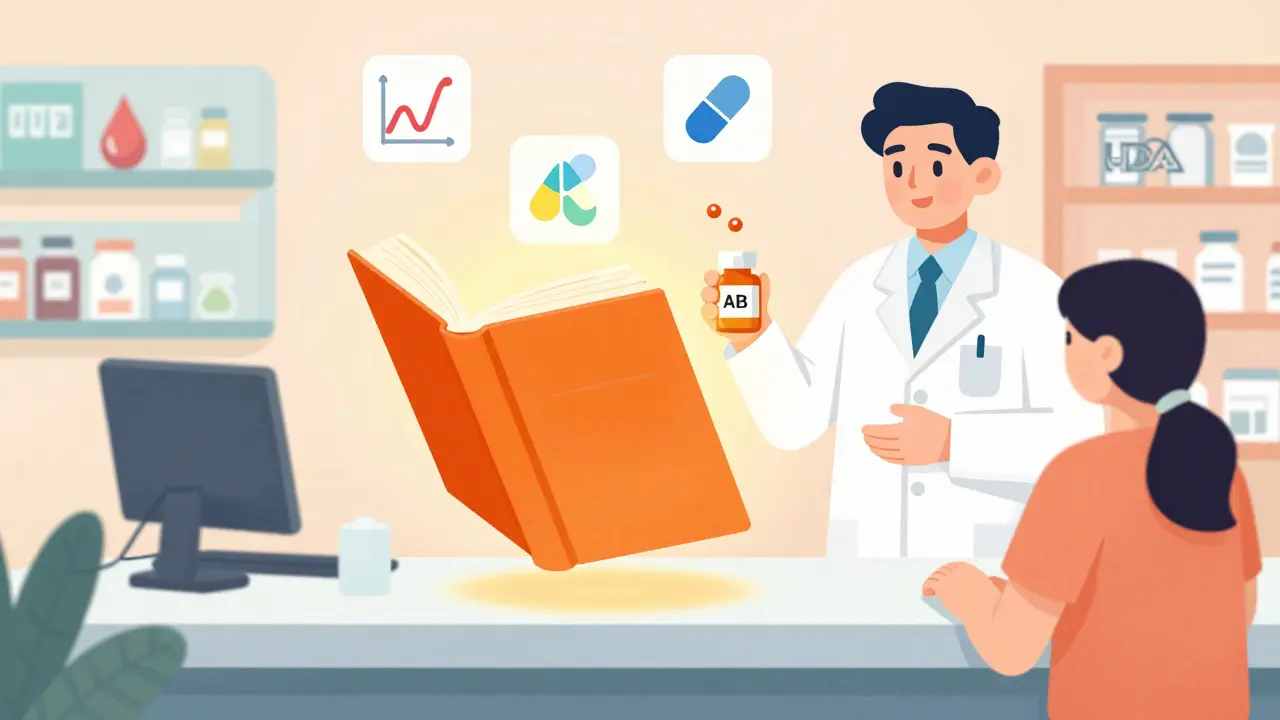
The Orange Book isn’t a book you’d find on a bedside table. It’s a critical, government-published reference that determines whether your pharmacist can swap your brand-name pill for a cheaper generic - and whether that swap is safe. Officially titled Approved Drug Products with Therapeutic Equivalence Evaluations, this document is the backbone of how generic drugs enter the U.S. market. Every time you fill a prescription and get a generic version instead of the brand-name drug, chances are the Orange Book made that possible.
What Exactly Is the Orange Book?
First published in 1980, the Orange Book is maintained by the U.S. Food and Drug Administration (FDA). It doesn’t list every drug on the market. Instead, it focuses on one thing: which generic drugs are therapeutically equivalent to their brand-name counterparts. That means they work the same way in your body, deliver the same dose, and produce the same clinical results. The goal? To give patients access to affordable medications without sacrificing safety or effectiveness.
The name comes from its original orange cover. Today, it’s primarily a digital resource, updated monthly. As of September 2023, it included evaluations for over 15,000 approved drug products. It’s not optional reading - it’s the rulebook pharmacies, insurers, and state boards of pharmacy use every day.
Therapeutic Equivalence: The Three Rules
Not all generics are created equal. The FDA doesn’t just say, “Looks similar, good to go.” To earn the label “therapeutically equivalent,” a generic drug must pass three strict tests:
- Pharmaceutical equivalence: The generic must contain the exact same active ingredient, in the same strength, dosage form (pill, injection, cream, etc.), and route of administration (oral, topical, etc.) as the brand-name drug.
- Bioequivalence: The generic must be absorbed into your bloodstream at the same rate and to the same extent as the original. This is tested through clinical studies measuring blood levels over time.
- FDA approval: The drug must be approved under the same regulatory standards, meet quality controls, and be labeled correctly.
If all three are met, the drug gets an “A” code. If not, it gets a “B.” That’s the core of the system. An “A” code means substitution is allowed. A “B” code means it’s not.
Understanding TE Codes: A, B, AB, BX - What Do They Mean?
The Orange Book uses a simple but powerful coding system: Therapeutic Equivalence (TE) codes. These two-letter codes tell pharmacists exactly what they can substitute.
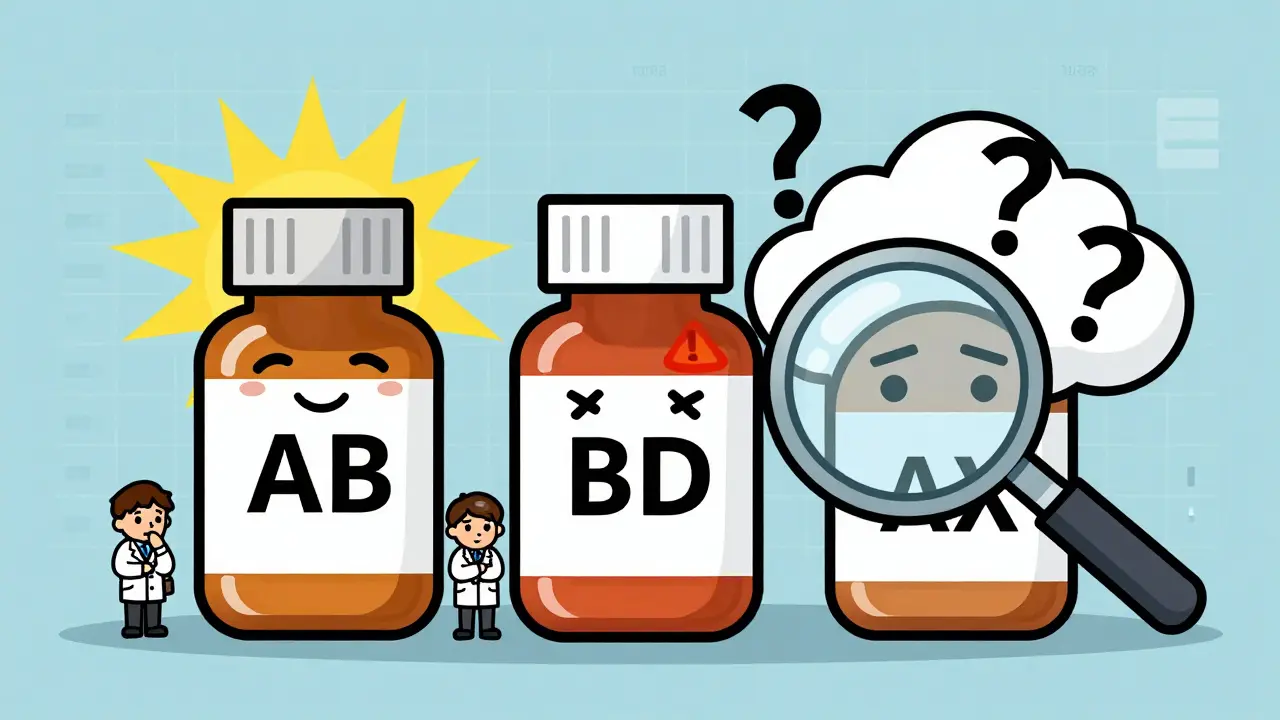
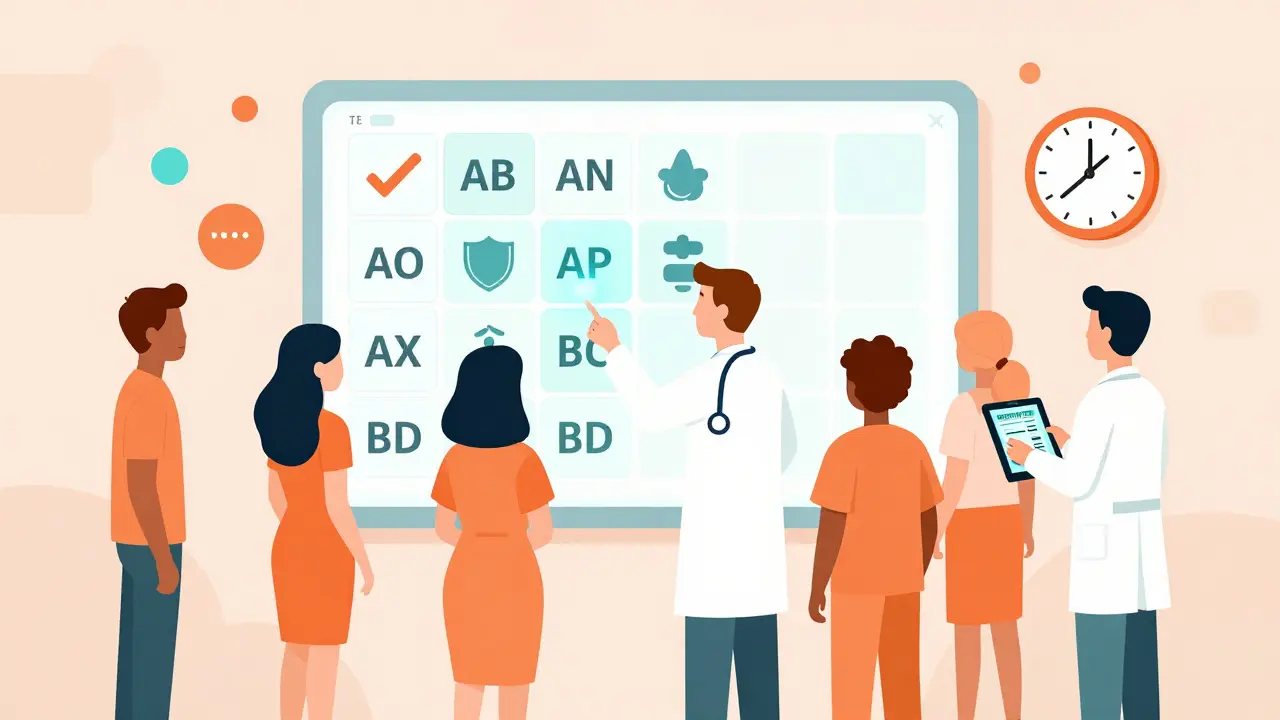
- AB: The gold standard. The generic is therapeutically equivalent with no known bioequivalence issues. This is the code you want. Most common generics carry this.
- AN: An injectable generic that’s equivalent, but with special considerations for sterile products.
- AO: An inhaler or other complex delivery system that’s equivalent based on specific testing.
- AP: A product that’s pharmaceutically equivalent but lacks full bioequivalence data - substitution may be allowed under certain conditions.
- AX: Not equivalent. Usually due to lack of data or known issues.
- BC or BD: These are red flags. The drug has potential bioequivalence problems. Substitution is discouraged or prohibited in many states.
For example, if your prescription says “Lisinopril 10 mg” and the pharmacy has two generics - one coded AB and one coded BD - the pharmacist can only substitute the AB version. The BD version? It’s not approved for substitution, even if it’s cheaper.
Why This Matters: Real-World Impact
Without the Orange Book, generic drugs wouldn’t be trusted. And without generics, healthcare costs would be unaffordable for millions.
Here’s the reality: 90% of prescriptions filled in the U.S. are for generic drugs. But they make up only 23% of total drug spending. Between 2010 and 2019, generics saved the U.S. healthcare system $1.67 trillion. That’s not a guess - it’s a documented figure from the Association for Accessible Medicines.
But the system isn’t perfect. In Q1 2022, Walgreens reported $1.2 million in rejected insurance claims due to incorrect substitution based on TE codes. Pharmacists misread codes like BC or BD, thinking they were interchangeable. The same issue caused confusion in 78% of pharmacies surveyed by a Reddit community of pharmacy technicians.
On the flip side, CVS Health launched an automated TE code verification system in 2021. It cut substitution errors by 63% and saved $47 million annually. That’s the power of getting this right.
Who Uses the Orange Book - And How?
It’s not just pharmacists. Insurers use it to build formularies. State laws require pharmacists to substitute when possible - but only if the Orange Book says it’s safe. Pharmacy benefit managers (PBMs) use TE codes to decide which generics to cover.
For pharmacists, checking the Orange Book isn’t optional. The FDA estimates they spend an average of 12.7 minutes per complex prescription verifying therapeutic equivalence. That’s time they could spend counseling patients - if the system were easier.
A 2023 survey by Pharmacy Times found that 92% of pharmacists consider the Orange Book “essential,” but 67% find the TE coding system “moderately to extremely difficult” to interpret without training. Many rely on software tools, not manual lookup.
What’s Missing? What’s Not Covered
The Orange Book doesn’t include everything. It skips drugs approved only for safety - like some older medications reviewed under the DESI program (e.g., Donnatal, Librax). It also doesn’t cover biologics, which have their own pathway (biosimilars). And while it includes drug-device combos like inhalers and auto-injectors, it requires special evaluation because the device matters as much as the drug.
For example, a generic inhaler might have a different nozzle design than the brand. As long as it delivers the same amount of medicine to the lungs and works the same way, it can get an “A” code. But if the device affects delivery - say, it doesn’t spray as finely - the FDA requires extra data. That’s why some inhalers carry “AO” or “AP” codes instead of “AB.”
Future of the Orange Book
The FDA is updating the system. A modernized digital version is rolling out in 2024. It will let users search by drug name, manufacturer, application number, and strength - all in one place. No more flipping through PDFs.
But bigger challenges are coming. Complex generics - like topical creams, nasal sprays, and injectables - are harder to test. Minor differences in how they’re made can change how they work. The FDA’s 2022 guidance made it clear: “The same clinical effect and safety profile” is still the rule. But proving that for a cream that absorbs through skin? That’s not as simple as measuring blood levels.
For now, the system works. It’s why you can get a $4 generic instead of a $400 brand. But it’s fragile. One misread code, one outdated database, one pharmacist without training - and the whole system risks losing trust.
What You Should Know as a Patient
You don’t need to memorize TE codes. But you do need to know this: if your pharmacist switches your drug, ask if it’s an “AB” code. If your prescription says “Dispense as Written” (DAW), that means your doctor doesn’t want substitution - even if the generic is coded AB.
And if you notice a change in how a generic drug works - side effects, effectiveness, timing - tell your pharmacist or doctor. Sometimes, even “AB”-coded generics can behave differently in rare cases. The Orange Book gives you a safety net. But your body is the final judge.
Is the Orange Book only for prescription drugs?
No. The Orange Book includes both prescription and over-the-counter (OTC) drugs. Part I covers prescription products with therapeutic equivalence codes. Part II covers OTC drugs that don’t fit into standard monographs. So if you’re using a generic antacid or allergy medicine, the Orange Book still applies.
Can a generic drug have the same TE code as the brand-name drug?
Yes. The brand-name drug is listed as the Reference Listed Drug (RLD) and gets its own TE code - usually AB if it’s a standard product. Any generic that meets the same standards gets the same code. So multiple brands and generics can share the same AB code, meaning they’re all considered interchangeable.
Why do some generics have ‘B’ codes if they’re FDA-approved?
A ‘B’ code means the FDA has not found enough evidence to say the generic is therapeutically equivalent. The drug may be approved for sale, but substitution is not recommended. This often happens with complex products like inhalers, topical creams, or drugs with narrow therapeutic indexes, where small differences in absorption could affect safety or effectiveness.
Do all states require pharmacists to use the Orange Book for substitution?
Yes. All 50 states and U.S. territories require pharmacists to check the Orange Book before substituting a generic for a brand-name drug. Some states have stricter rules - for example, banning substitution for ‘BC’ or ‘BD’ coded drugs even if the prescriber didn’t say “dispense as written.”
How often is the Orange Book updated?
The Orange Book is updated every month. New generic approvals, withdrawn products, and revised TE codes are added monthly. Pharmacies and insurers rely on this schedule to keep their systems current. The FDA provides a free searchable database online, so pharmacists always have access to the latest version.
Next Steps for Patients and Providers
If you’re prescribed a generic drug and it doesn’t seem to work the same way as the brand, don’t assume it’s all in your head. Ask your pharmacist to check the TE code. If it’s AB, you’re likely fine - but if it’s AP, AX, or BC, there may be a reason.
For prescribers: If you want to prevent substitution, write “Dispense as Written” or “DAW 1” on the prescription. But if you’re okay with generics, let the system work. The Orange Book is there to protect you - not just save money, but ensure safety too.

John Sonnenberg
February 8, 2026 AT 22:31PAUL MCQUEEN
February 10, 2026 AT 20:01glenn mendoza
February 12, 2026 AT 11:11John Watts
February 14, 2026 AT 08:13Randy Harkins
February 14, 2026 AT 08:33Chima Ifeanyi
February 15, 2026 AT 19:13Tori Thenazi
February 16, 2026 AT 16:16Angie Datuin
February 18, 2026 AT 16:06Jonah Mann
February 19, 2026 AT 03:11THANGAVEL PARASAKTHI
February 20, 2026 AT 00:16Chelsea Deflyss
February 20, 2026 AT 08:32Tricia O'Sullivan
February 21, 2026 AT 16:55Alex Ogle
February 22, 2026 AT 09:14Brandon Osborne
February 24, 2026 AT 04:05Marie Fontaine
February 24, 2026 AT 20:53