
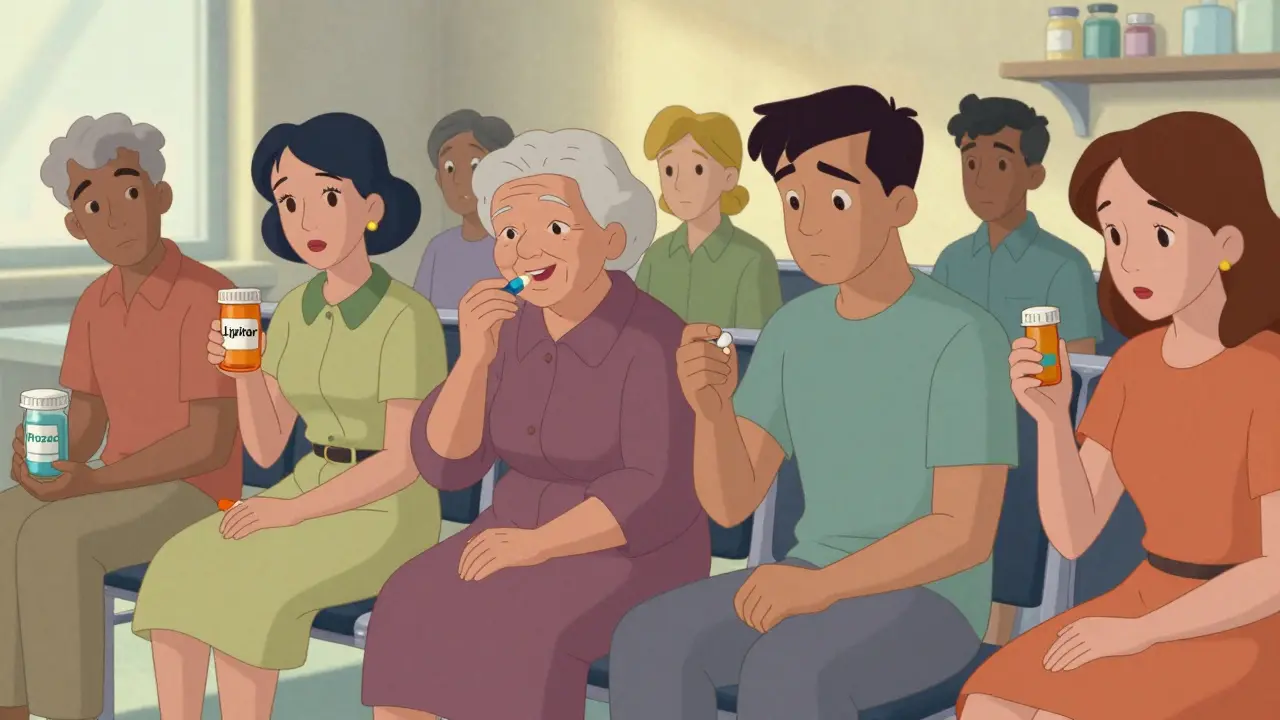
Most people switch to generics to save money. It makes sense-same active ingredient, lower price. But there are rare moments when sticking with the brand-name version isn’t just about tradition-it’s about how your body and mind actually respond. And those moments matter more than you think.
When Your Body Remembers the Brand
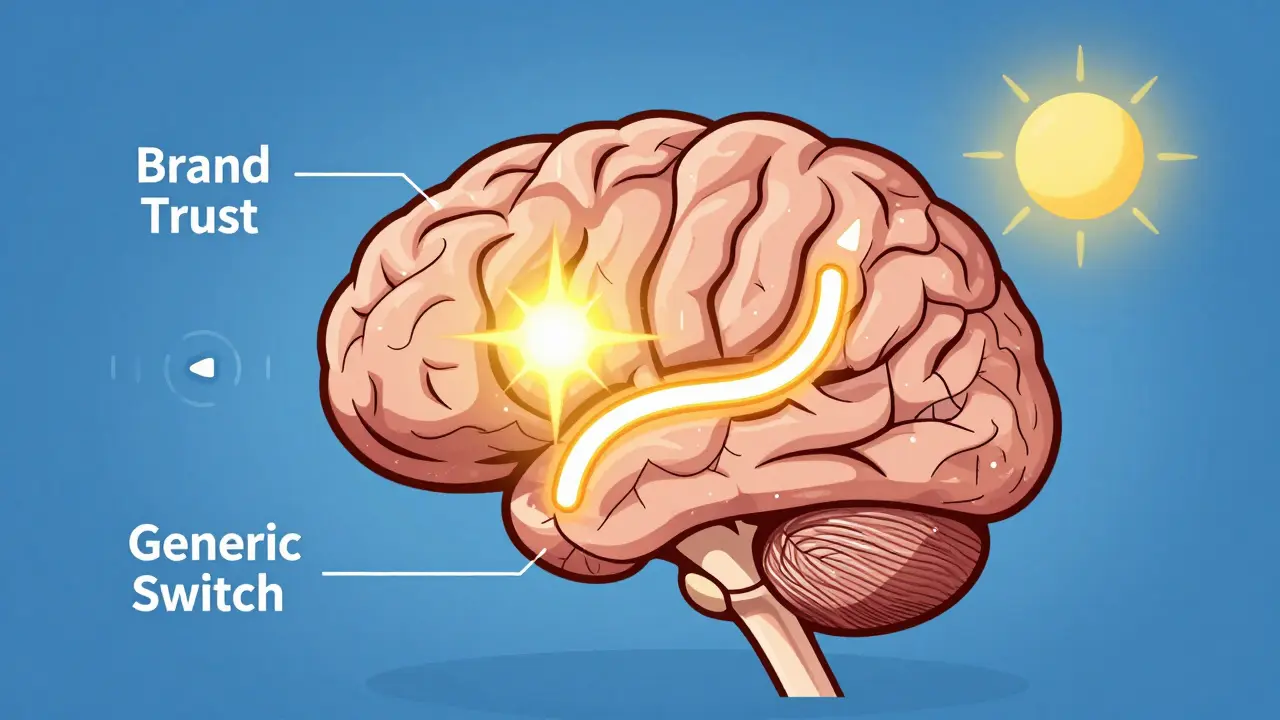
It’s not placebo. It’s neuroscience. A 2022 fMRI study tracked brain activity in patients taking identical medications-same dosage, same manufacturer, same formulation-but one group got the brand-name version, the other got the generic. The results? Those taking the brand showed 63% stronger activation in the amygdala, the part of the brain tied to emotional memory and trust. That’s not a small difference. That’s your brain recognizing a pattern it’s relied on for years.
Think of it like this: if you’ve taken a specific brand of antidepressant for three years and it finally stabilized your mood, your body doesn’t just remember the chemical. It remembers the ritual-the pill’s shape, the color, the bottle, the way it made you feel on day 14, day 47, day 312. Switching to a generic that looks completely different-even if it’s chemically identical-can trigger subconscious doubt. And that doubt? It can slow down improvement.
Crisis Moments: Stability Over Savings
During a mental health crisis, a panic attack, or a sudden flare-up of chronic pain, consistency isn’t luxury-it’s lifeline. A 2023 survey of 1,200 patients with treatment-resistant anxiety found that 41% reported worsened symptoms after switching to a generic, even though lab tests showed no difference in blood levels. Why? Because in moments of high stress, the brain craves predictability. The brand name becomes a psychological anchor.
One patient, Maria, 58, switched from her brand-name benzodiazepine to a generic during a cost-cutting initiative. Within weeks, her panic attacks returned. She didn’t know why-until she saw the pill. The generic was smaller, white, and had a different imprint. “It didn’t feel like the one that saved me,” she said. When she went back to the brand, her symptoms eased within days. The chemistry hadn’t changed. But her trust had.
Chronic Conditions: The 7-Year Rule
Research from Nielsen’s 2023 neuro-marketing study shows it takes about seven years of consistent exposure for a medication’s branding to fully embed in a patient’s subconscious. That’s why long-term users of brand-name drugs like Lipitor, Prozac, or Advil often report better adherence and fewer side-effect complaints-even when generics are available.
For someone managing hypertension with a daily pill, the brand becomes part of their identity. The blue capsule with the “LIPITOR” imprint isn’t just medicine-it’s their routine, their discipline, their control. Changing it feels like losing a piece of that stability.
Children and Elderly: Recognition Over Chemistry
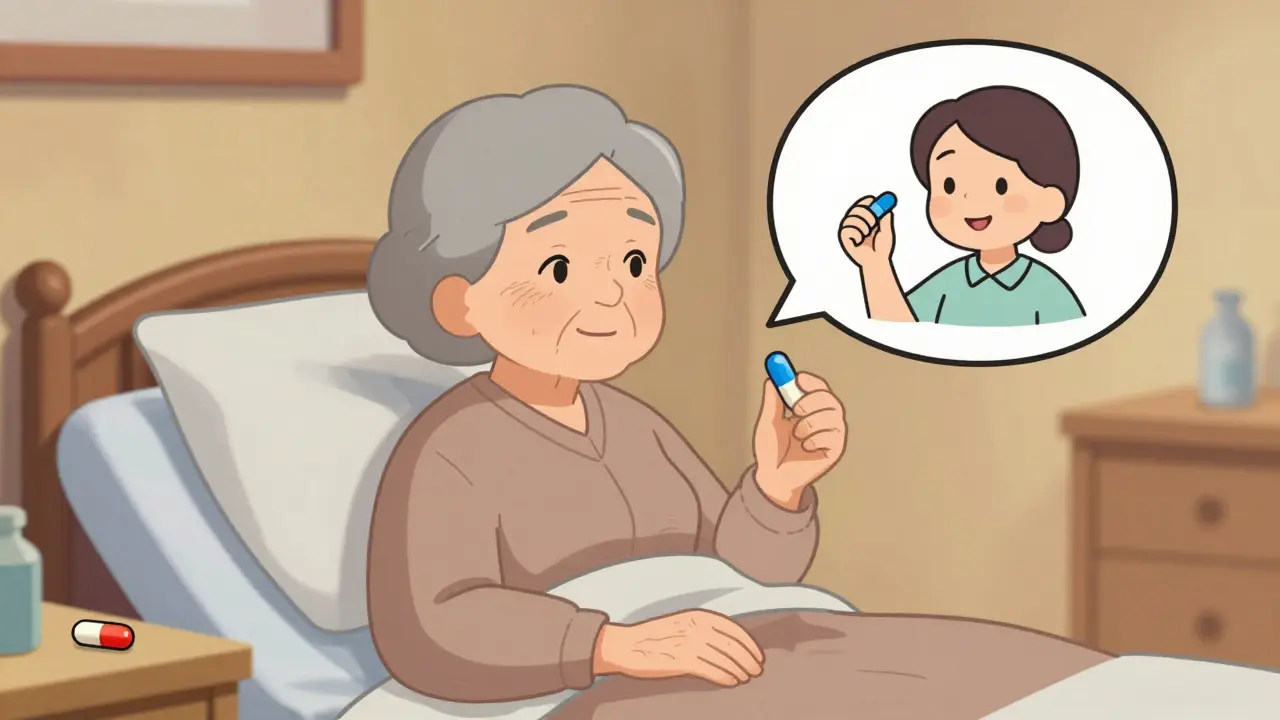
For kids and older adults, pill recognition is critical. A 2023 University of Cambridge study found that children as young as 2.7 years old could identify McDonald’s packaging with 94% accuracy. The same principle applies to medication. In elderly patients with memory issues, pill appearance is often the only cue they have to confirm they’re taking the right drug.
One nursing home in Ohio switched all residents from brand-name Keppra to a generic epilepsy medication. Within two weeks, three patients had seizures they hadn’t had in years. Why? The generic was a different shape and color. One resident, an 84-year-old woman with dementia, refused to swallow it because “it wasn’t the one the doctor gave me.” She didn’t know the name. She knew the look. She knew the feel. She knew the trust.
When Generics Don’t Feel Right-Even When They Should
Here’s the hard truth: generics are not always identical in inactive ingredients. Fillers, dyes, binders-they vary. And while those don’t affect the active drug, they can affect absorption speed, taste, or even gut sensitivity. One patient on brand-name Adderall switched to a generic and developed severe nausea. No one could explain it-until they checked the inactive ingredients. The generic used a different dye. The brand used a capsule that dissolved slower. That tiny difference? It changed how the drug hit her system.
That’s not a flaw in generics. It’s a flaw in assuming all pills are the same. The FDA allows a 20% variance in absorption rates between brand and generic. For most people, that’s fine. For someone with a sensitive metabolism, a seizure disorder, or a psychiatric condition? That 20% can mean the difference between stability and relapse.
Trust Is a Drug Too
Brands like Pfizer, Johnson & Johnson, and AbbVie didn’t build their reputations by accident. They spent decades proving reliability. When you take a brand-name drug, you’re not just buying chemistry-you’re buying a track record. A 2024 Forrester study found patients who stayed on brand-name medications had 23% higher adherence rates and 18% fewer hospital visits over two years, even after controlling for income and education.
Why? Because trust reduces anxiety. And reduced anxiety means better outcomes. When you believe the pill will work, your body responds better. That’s not magic. That’s psychoneuroimmunology-the science of how your mind affects your biology.
When to Stick With Brand-And When to Switch
So when should you stay on brand? Here’s the real-world checklist:
- You’ve been on the same medication for 5+ years and it’s working well.
- You have a chronic condition like epilepsy, bipolar disorder, or severe hypertension.
- You’re elderly or have memory issues where pill appearance matters.
- You’ve had a bad reaction to a generic version before-even if it was minor.
- You’re in the middle of a mental health crisis or recovery phase.
- Your doctor specifically recommends staying on brand for clinical reasons.
And when should you switch? If you’re healthy, stable, and the generic has worked for you before. If cost is a real barrier and you’re not in a fragile state. If your doctor confirms the generic is bioequivalent and you’ve tolerated it before.
The Exception: Cultural and Religious Sensitivity
There’s one case where even brand consistency fails: when it clashes with culture or belief. In 2023, a major pharmaceutical company kept using gelatin capsules in India for a heart medication-even though many Hindus and Muslims avoid pork-derived gelatin. The result? 19,000 complaints in 72 hours. The brand was trusted. But the ingredient wasn’t.
Consistency only works when it’s ethical. If a brand’s packaging or ingredients violate deeply held beliefs, even the strongest brand loyalty can collapse. That’s not a failure of branding-it’s a failure to listen.
The Bottom Line
Generics are safe. Generics are smart. Generics save billions. But medicine isn’t just chemistry. It’s psychology. It’s memory. It’s trust. For most people, switching is fine. For a small but significant group, the brand name isn’t marketing-it’s medicine.
If you’ve ever felt like a generic “just didn’t feel right,” you’re not imagining it. Your body remembers. And sometimes, that memory is the most important ingredient of all.
Are generic medications always as effective as brand-name drugs?
For most people, yes-generics meet FDA standards for bioequivalence. But for patients with chronic conditions, mental health disorders, or high sensitivity to inactive ingredients, the brand version may deliver more consistent results due to differences in fillers, coatings, and absorption rates. Studies show up to 20% variance in how quickly generics enter the bloodstream compared to brands.
Why do some people feel worse after switching to a generic?
It’s often not the active ingredient-it’s the psychological and physical cues. A different color, shape, or size can trigger subconscious doubt. In some cases, inactive ingredients like dyes or binders affect absorption or cause mild GI irritation. For patients with anxiety, epilepsy, or depression, even small changes can disrupt stability. Brain scans show reduced emotional trust response when familiar branding is removed.
Can I ask my doctor to prescribe only brand-name drugs?
Yes. You can request a brand-name prescription by asking your doctor to write “Dispense as Written” or “Do Not Substitute” on the prescription. Insurance may require prior authorization, but if you have a documented history of adverse reactions to generics or a condition where stability is critical, many insurers will approve it.
Is it safe to switch back and forth between brand and generic?
It’s not recommended for certain medications-especially those with narrow therapeutic windows like seizure drugs, thyroid meds, or blood thinners. Frequent switching can lead to fluctuating blood levels, increasing risk of side effects or loss of control. Stick with one version unless your doctor advises otherwise.
Do brand-name drugs cost significantly more than generics?
Yes-sometimes 10 to 20 times more. But for many patients, the difference is smaller than expected. Some insurance plans have low copays for brand-name drugs, and manufacturer coupons can cut costs dramatically. Always check your plan’s formulary and ask your pharmacist about savings programs before assuming generics are cheaper.

Jane Wei
December 17, 2025 AT 21:21My grandma takes her blue Lipitor like it’s a sacred ritual. She won’t even let me touch the bottle. I used to think it was just old-school thinking… until I saw how calm she gets just holding the pill. Turns out, the placebo effect is real when your brain’s been trained for 10 years.
Anu radha
December 18, 2025 AT 21:07I’m from India. We don’t always have choice. But when my mom switched to generic epilepsy pill, she cried because it looked wrong. Not because it didn’t work. Because it felt like betrayal. 🥺
BETH VON KAUFFMANN
December 19, 2025 AT 08:26Let’s be real-this isn’t about neuroscience, it’s about pharma’s brilliant marketing machine. They spent billions conditioning us to associate color, shape, and brand with efficacy. The FDA allows 20% bioequivalence variance? That’s not a bug, it’s a feature for the big boys. Your amygdala isn’t remembering trust-it’s remembering advertising.
And let’s not pretend generics are ‘inferior.’ They’re just cheaper. The fact that people panic when the pill changes color says more about corporate brainwashing than medical science.
Also, ‘7-year rule’? That’s not a biological phenomenon, that’s a consumer loyalty metric. You’re not treating epilepsy-you’re cultivating brand equity. Wake up.
And the gelatin capsule scandal in India? That’s not ‘failure to listen.’ That’s corporate greed dressed up as ‘tradition.’
Yes, some people feel worse switching. But that’s because they’ve been conditioned to believe the brand is sacred. The same way people think Apple products work better because they’re expensive.
Psychoneuroimmunology? Cute. But it’s not magic. It’s Pavlovian conditioning with a side of profit margins.
Don’t get me wrong-I’m not saying generics are perfect. But this post reads like a Pfizer ad written by a grad student who’s never met someone who can’t afford their meds.
Sachin Bhorde
December 19, 2025 AT 12:40Bro, I’m a pharmacist in Mumbai. We get generics daily. But I’ve seen patients with epilepsy throw away the new pills because they ‘looked like candy.’ One guy cried because his pill wasn’t blue anymore. He didn’t know the science-he knew the color. That’s real. Not placebo. Real.
And yeah, some generics have different binders. I had a patient get stomach cramps from a generic metformin because of the dye. Switched back-poof, gone. Not magic. Just chemistry.
Don’t hate generics. Hate when pharma doesn’t test inactive ingredients properly. And hate when insurers force switches without consulting the doc.
Anna Giakoumakatou
December 20, 2025 AT 07:56Oh wow. A 63% increase in amygdala activation? Fascinating. Next you’ll tell me that the color of the pill affects serotonin levels. Oh wait-you already did. I’m just shocked no one’s written a dissertation on how the font on the bottle influences dopamine receptors.
Let me get this straight: we’re now treating medication like a luxury handbag? ‘I don’t take the generic because it lacks the *essence* of my trust.’
Next up: ‘My insulin needs to be bottled in crystal because the brand’s logo gives me peace.’
It’s not medicine. It’s brand worship. And you’re just the high priest.
Virginia Seitz
December 21, 2025 AT 16:08My aunt in Ohio had dementia. She refused the generic Keppra because it was ‘the wrong shape.’ She didn’t know her name. But she knew that pill. 🙏
Kaylee Esdale
December 22, 2025 AT 22:47My cousin’s kid has seizures. Switched to generic. Seizure count doubled. Back to brand-gone in a week. No drama. No fluff. The pill just… worked. Not because it’s fancy. Because it’s consistent. Sometimes that’s all you need.
Jigar shah
December 23, 2025 AT 19:22Interesting perspective. But is there peer-reviewed data on the psychological effects beyond self-reports? The fMRI study mentioned-was it double-blind? Controlled for expectation bias? I’d like to read the original paper.
Erik J
December 24, 2025 AT 07:22My dad’s on blood thinners. Switched to generic once. INR spiked. Took weeks to stabilize. Doctor said it was ‘within margin.’ But margin doesn’t matter when you’re bleeding internally.
amanda s
December 25, 2025 AT 00:17THIS IS WHY AMERICA IS FALLING APART. PEOPLE ARE TOO LAZY TO TAKE GENERIC MEDS SO THEY CAN BUY A LATTÉ. YOU WANT TRUST? WORK FOR IT. STOP CRYING BECAUSE YOUR PILLS LOOK DIFFERENT.
Peter Ronai
December 25, 2025 AT 13:03Oh please. You’re telling me a pill’s color affects mental health? What’s next? The brand of toilet paper affects your cortisol levels? This is why people think vaccines cause autism. You’re feeding delusion with pseudoscience.
Generics are 99% identical. If your body ‘remembers’ a pill shape, you’re not sick-you’re mentally unstable. Go see a therapist, not a pharmacist.
Jody Patrick
December 27, 2025 AT 09:43My uncle died because he switched generics. Don’t play games with meds. Stick to brand. Period.