
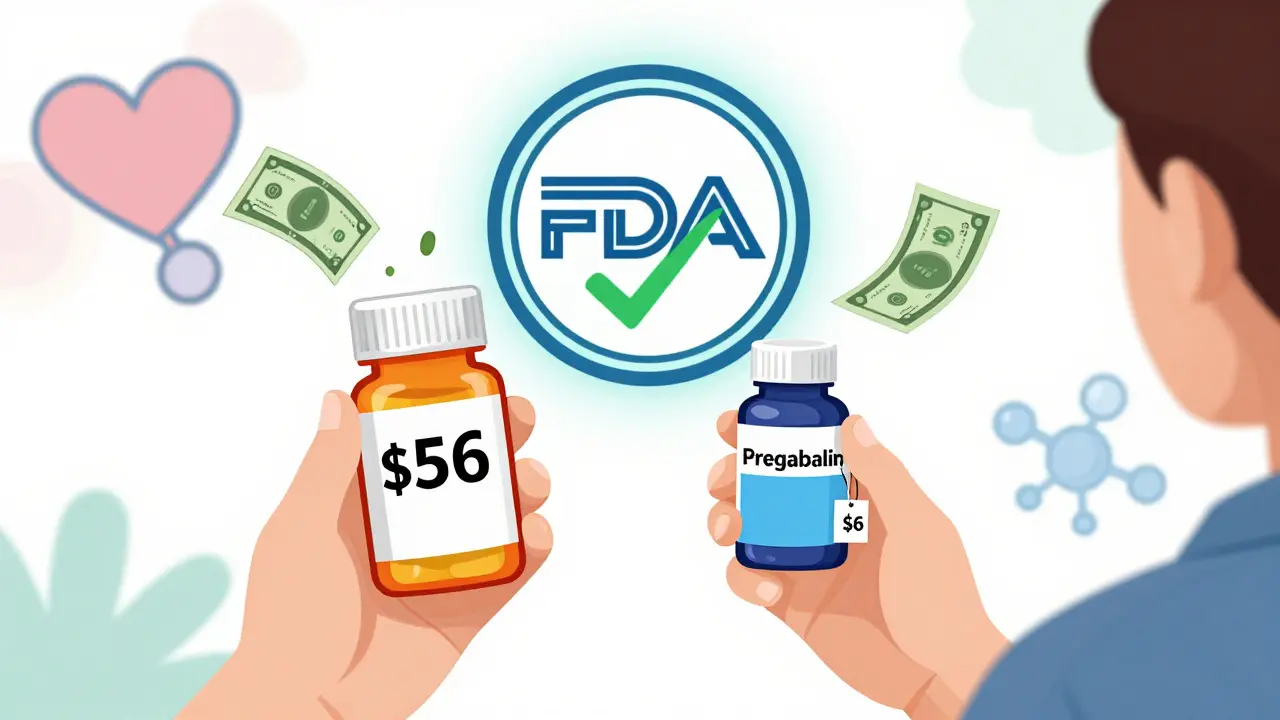
When you pick up a prescription, you might see two options on the label: a brand-name drug like Lyrica or its generic version, pregabalin. They look different, have different names, and cost dramatically different prices-but they work the same way. The reason generics cost so much less isn’t because they’re cheaper to make. It’s because they don’t have to pay for the same things brand-name drugs do.
How Generic Drugs Are Approved
Generic drugs aren’t knockoffs. They’re exact copies in every way that matters: same active ingredient, same dose, same way you take it, same safety profile. The FDA requires them to be bioequivalent-meaning they deliver the same amount of medicine into your bloodstream at the same rate as the brand-name version. No guesswork. No shortcuts on quality.
But here’s the key difference: brand-name companies spend years and hundreds of millions of dollars developing a new drug, running clinical trials, and proving it works. Once they get FDA approval, they get a patent. That patent lets them be the only one selling it for a while, usually 10-12 years. During that time, they set the price.
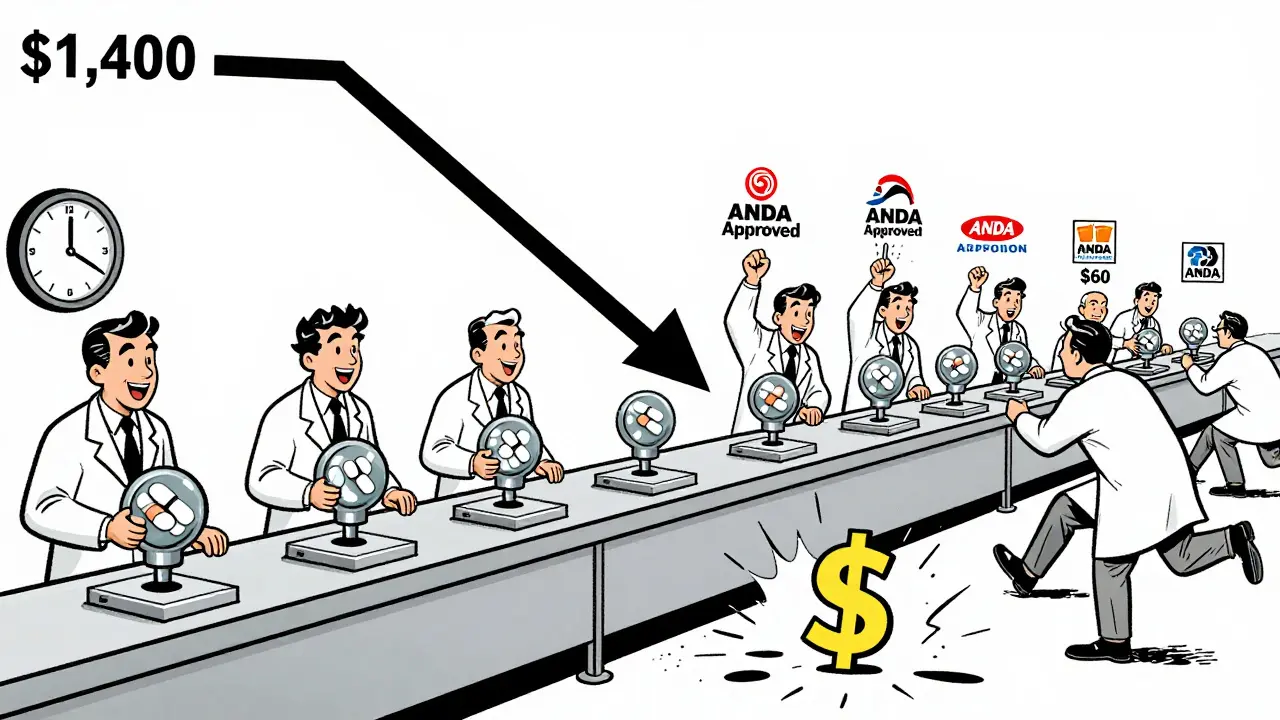
Generics skip all that. When the patent expires, another company can apply for approval using the Abbreviated New Drug Application (ANDA). They don’t need to repeat clinical trials. They just need to prove their version works the same. That cuts development costs by 90% or more. That’s where the savings start.
The Real Cost Breakdown
Let’s look at numbers. In 2022, the average copay for a brand-name drug was $56.12. For a generic? Just $6.16. That’s nearly nine times cheaper. And it’s not just out-of-pocket costs-insurers save too. When a generic hits the market, prices often drop to 15-20% of the brand’s price within a year. With more companies making the same drug, prices keep falling.
Take lurasidone (brand name Latuda). Before generics, a 30-day supply cost around $1,400. After generic competition, it dropped to under $60. That’s a 95% drop. Pemetrexed (Alimta) went from $3,800 per month to $500. In 2022 alone, generic and biosimilar drugs saved the U.S. healthcare system over $408 billion. Over the last decade? Nearly $3 trillion.
These aren’t outliers. They’re the rule. The FDA found that when three or more generic manufacturers enter the market, prices fall another 20% within three years. More competitors = lower prices. Simple economics.
Why Some Generics Still Cost Too Much
Not all generics are created equal in price. Some are cheap. Others? Not so much. A 2022 study in JAMA Network Open found 45 generic drugs that were priced higher than other, equally effective alternatives. In Colorado, replacing just those high-cost generics cut spending from $7.5 million to under $900,000-88% savings.
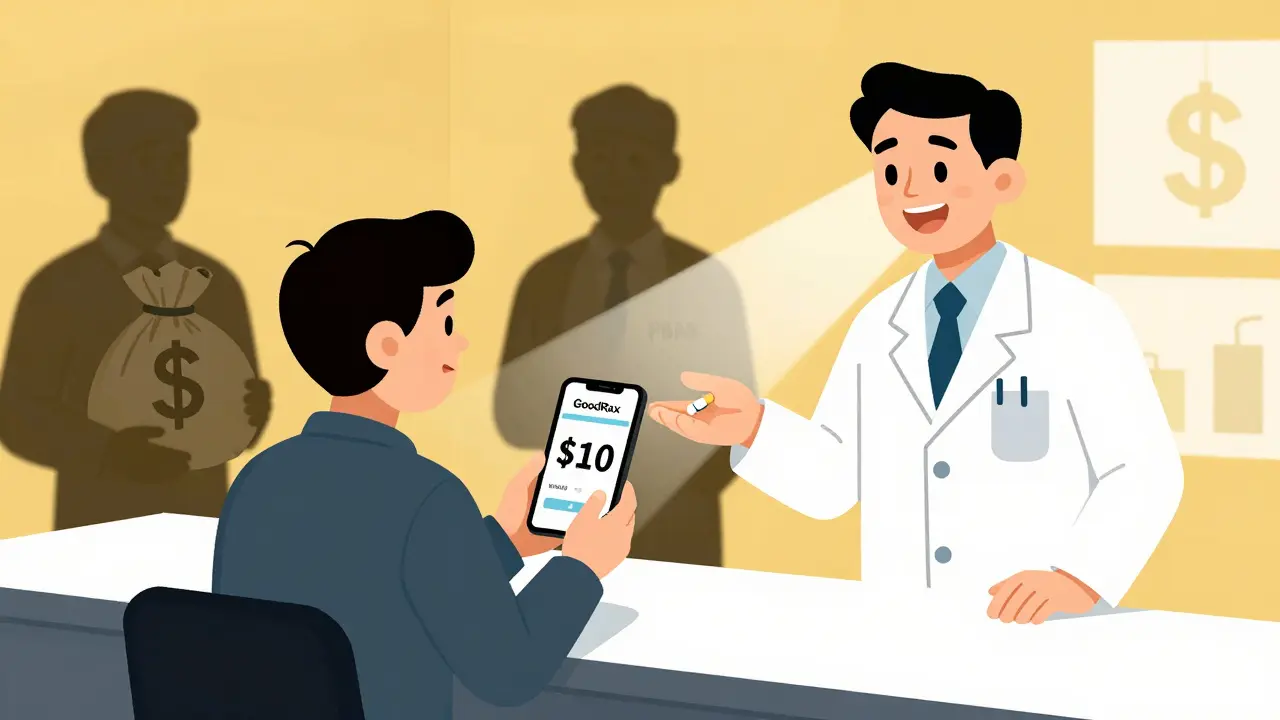
Why does this happen? One big reason: spread pricing. Pharmacy benefit managers (PBMs) negotiate prices with pharmacies and insurers. Sometimes, they profit from the gap between what they pay the pharmacy and what they collect from insurers. If a generic drug costs $50 to make but the PBM negotiates a $40 reimbursement from the insurer and pays the pharmacy $35, they pocket $5 per prescription. That’s fine if the drug is cheap. But if they’re pushing a $100 generic over a $20 generic because it gives them a bigger spread? You’re paying more.
That’s why one generic for a common condition might cost $15 at one pharmacy and $40 at another. It’s not about quality. It’s about who’s making money behind the scenes.
How to Save Even More
Knowing generics are cheaper doesn’t always mean you’re getting the best price. You still need to shop around.
- Ask your doctor to write "dispense as written" on the prescription. That lets the pharmacist choose the generic if available.
- Use free tools like GoodRx or SingleCare. They show cash prices at nearby pharmacies-often lower than your insurance copay, especially if you have a high-deductible plan.
- Try mail-order pharmacies for long-term medications. A 90-day supply often costs less than three 30-day fills.
- Check if your drug is available through the Mark Cuban Cost Plus Drug Company. They sell 26% of expensive generics at near-cost prices, sometimes under $10 a month.
A study in JAMA Internal Medicine found patients with chronic conditions who compared prices saved an average of $287 a year. That’s $24 a month. Just by spending five minutes checking a website.
Who Benefits the Most?
People without insurance benefit the most. A 2023 study showed uninsured patients saved $6.08 per prescription on average by buying generics through cash-price apps instead of insurance. Even those with insurance saved $4.96 per prescription.
But here’s the catch: if you’re on a high-deductible plan, your insurance might not kick in until you’ve paid $2,000 or more out of pocket. In those cases, paying cash for a $10 generic is smarter than paying $50 and counting it toward your deductible.
And it’s not just about money. In 2023, 93% of generic prescriptions cost under $20. Only 59% of brand-name ones did. That means for most people, generics make it possible to afford their meds month after month.
What’s Next?
The FDA approved over 700 new generic drugs in 2022. More are coming. As big-name drugs like Humira, Enbrel, and others lose patent protection over the next few years, biosimilars (generic versions of biologic drugs) will enter the market. Analysts predict they’ll save $150 billion between 2023 and 2027.
But challenges remain. Some generic drugs are at risk of shortage because manufacturing is concentrated overseas. A few manufacturers control most of the supply. If one shuts down, prices spike. The FDA tracks 202 "at-risk" generics. And regulators are still fighting "pay-for-delay" deals-where brand companies pay generic makers to delay entering the market.
Still, the trend is clear: competition drives prices down. The more companies that can make a drug, the cheaper it gets. And the system works-when it’s not being manipulated.
What You Can Do Today
Don’t assume your insurance gives you the best price. Always check GoodRx or SingleCare before filling a prescription. Ask your pharmacist if there’s a cheaper generic alternative. If your doctor says "this is the only one that works," ask why. Sometimes, it’s habit-not science.
Generic drugs aren’t just cheaper. They’re just as safe. Just as effective. And for millions of people, they’re the only way to afford treatment. If you’re paying more than you need to, it’s not because you’re stuck. It’s because no one showed you how to look.
Are generic drugs as safe and effective as brand-name drugs?
Yes. The FDA requires generic drugs to have the same active ingredient, strength, dosage form, and route of administration as the brand-name version. They must also meet the same strict standards for quality, purity, and stability. Bioequivalence studies prove they work the same way in the body. Millions of people use generics every day without any difference in results.
Why do some generics cost more than others?
It’s not about quality-it’s about market dynamics. Some generics are priced higher because only one or two companies make them. Others are pushed by pharmacy benefit managers (PBMs) who profit from the difference between what they pay pharmacies and what insurers pay them. This "spread pricing" can make a $10 generic cost $40. Always compare cash prices using tools like GoodRx.
Should I always choose the generic version?
In almost every case, yes. Unless your doctor has a specific medical reason to prescribe the brand (rare), the generic is just as effective and far cheaper. If you’ve had a bad reaction to a generic before, talk to your doctor. But for most people, switching to generic saves money with zero loss in effectiveness.
Can I save money by paying cash instead of using insurance?
Often, yes. Especially if you have a high-deductible plan, Medicare Part D, or no insurance at all. Many generics cost less than your insurance copay. Tools like GoodRx show cash prices that are frequently 50-80% lower than your insurance price. Always check both before filling your prescription.
What’s the difference between generic and biosimilar drugs?
Generics are exact copies of small-molecule drugs (like pills for blood pressure or depression). Biosimilars are highly similar versions of complex biologic drugs (like insulin, rheumatoid arthritis treatments, or cancer drugs). They’re not identical because biologics are made from living cells, but they work the same way and cost significantly less than the brand-name biologic. Biosimilars are the next big wave of cost savings.
Why aren’t all generic drugs available everywhere?
Manufacturing is concentrated in a few countries, and some drugs are made by only one or two companies. If one factory shuts down or faces supply issues, shortages happen. Also, some pharmacies don’t stock certain generics because they’re not profitable under insurance contracts. That’s why checking prices across multiple pharmacies matters.
Do generic drugs take longer to work?
No. The FDA requires generics to be bioequivalent, meaning they enter your bloodstream at the same rate and in the same amount as the brand-name drug. If you notice a difference in how a generic works, it could be due to inactive ingredients (like fillers), which are rare. Talk to your pharmacist or doctor if you’re concerned.
